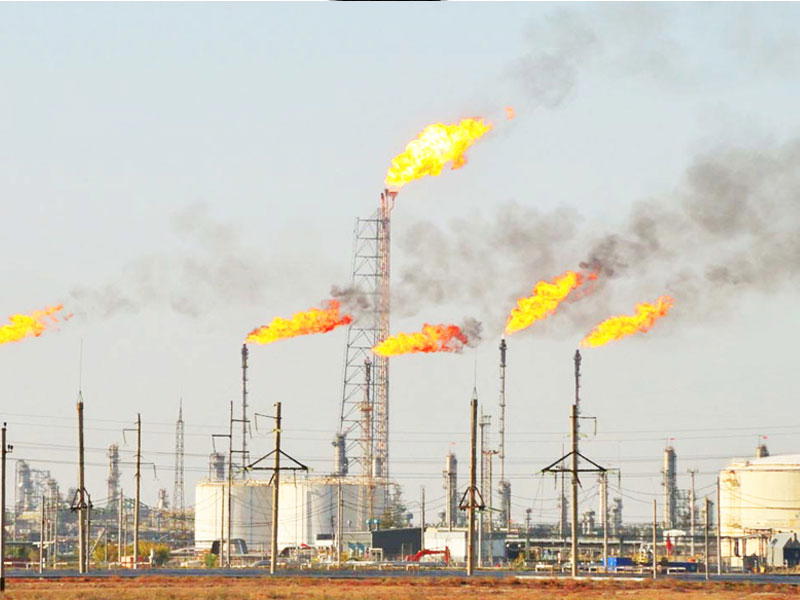
Intro: Every day, across our vibrant nation, millions of homes and businesses grapple with the harsh reality of erratic power supply. Fridges warm up, vital businesses stutter, and the drone of generators becomes the soundtrack to our lives. But what if I told you that in just one month, May 2026, Nigeria lost enough potential electricity—a staggering 3,100 gigawatt-hours (GWh)—to power countless communities, simply because oil companies continue to burn off natural gas, a practice known as gas flaring, right under our very noses? This isn't just an abstract number; it's a direct blow to your pocket, your dreams, and our nation's future.
What Is Happening on the Ground
Our federal government has a bold vision: to transform Nigeria into a gas-driven economy by 2030, a goal championed under the 'Decade of Gas' initiative launched in 2021. Imagine a Nigeria where power is reliable, industries hum, and gas exports boost our national coffers. It's a beautiful dream, isn't it? Yet, a recent report paints a starkly different picture, one riddled with challenges that threaten to extinguish this very ambition.
In May 2026 alone, our country effectively threw away 3,100 GWh of electricity generation potential. This monumental waste is a direct consequence of persistent gas flaring by oil companies operating in Nigeria. Think about that for a moment: enough energy to light up entire cities, gone, simply because companies choose to burn off gas rather than capture and utilise it.
Adding to the confusion and frustration are conflicting figures from our own regulatory bodies. The Nigerian Upstream Petroleum Regulatory Commission (NUPRC) reported 17.6 million standard cubic feet (MMSCF) of gas flared in May 2026, while the National Oil Spill Detection and Response Agency (NOSDRA) put the figure much higher, at 30.7 million standard cubic feet (MSCF). This discrepancy isn't just about numbers; it raises serious questions about accountability and transparency in a sector that is the lifeblood of our economy.
NOSDRA's data further reveals the financial hemorrhaging caused by this practice. The monetary value of the gas flared in May 2026 stood at an astounding $107.5 million. And the defaulting companies, including the big International Oil Companies (IOCs), are liable for penalties amounting to $61.4 million. It seems they find it more convenient to pay a fine than to invest in solutions that would benefit us all.
“We are tired of darkness and noise! Every time they talk about gas, we only hear about how much is being wasted or stolen. This gas is ours, it should power our homes, not burn uselessly in the sky!” - A visibly frustrated Mama Ngozi, owner of a small provision store in Ojuelegba.
The Main Issues
The problem of gas flaring isn't new; it's a stubborn scar on our landscape, persisting since the 1950s. But its implications in 2026 are more dire than ever. Firstly, there’s the environmental catastrophe. The volume of gas flared in May alone translated into an estimated 1.6 million tonnes of carbon dioxide emissions. This isn't just an abstract global warming statistic; it means acid rain damaging our crops, respiratory illnesses for communities living near flare sites, and a visibly polluted atmosphere. Our children are breathing in this toxic air, threatening their health and future.
Secondly, it’s an economic betrayal. Imagine the industries that could thrive, the jobs that could be created, and the businesses that could flourish if that lost 3,100 GWh of electricity were available. Small and medium enterprises, the backbone of our economy and the hope for our teeming youth, are constantly hampered by power instability. Investment in the gas sector has reportedly increased, yet this hasn't translated into improved gas production and utilisation, suggesting a significant leakage in the system.
And then there’s the governance reality. The disagreement between NUPRC and NOSDRA on flare volumes highlights a systemic challenge in monitoring and enforcement. If our agencies cannot agree on the scale of the problem, how can we effectively tackle it? The Renevlyn Development Initiative (RDI) hit the nail on the head by pointing out that oil companies in the Niger Delta seem 'more comfortable paying penalties than ending the practice.' This isn't just a comfort; it's a stark indication that the penalties are simply not deterrent enough.
- Nigeria lost an estimated 3,100 GWh of electricity potential to gas flaring in May 2026 alone.
- The value of flared gas in May 2026 was $107.5 million, while penalties amounted to $61.4 million.
- Gas flaring has persisted in Nigeria since the 1950s, releasing harmful carbon dioxide.
- Nigeria's inability to consistently generate over 4,000 MW of electricity is partly due to inadequate gas supply.
- Oil companies paid an estimated $646 million in gas flaring penalties in 2025, the highest in five years.
The Impact on Daily Life
For the everyday Nigerian, this isn't just news; it's a painful daily reality. Our inability to consistently generate more than 4,000 megawatts (MW) of electricity means perpetual darkness for many. What does this mean for you?
- Your Pocket: You spend hard-earned money on generators, fuel, and inverter batteries just to keep your lights on or your phone charged. This eats deeply into household budgets already stretched thin by inflation.
- Small Businesses: A tailor cannot run his sewing machine, a welder cannot complete his orders, a barber cannot attend to his customers, and cold room operators risk losing their entire stock. This translates to lost income, reduced productivity, and a struggle for survival for countless entrepreneurs.
- Youth Survival: How can our bright young minds study effectively in darkness? How can they innovate, develop digital skills, or compete globally when basic infrastructure like electricity is so unreliable? The lack of power directly impacts their ability to secure jobs and build a future, contributing to unemployment and social unrest.
- Health and Environment: The constant hum and fumes from generators contribute to noise pollution and exacerbate respiratory issues, especially for those living in densely populated areas. It’s a vicious cycle where we burn expensive fuel to compensate for wasted national resources, further harming our health and environment.
The numbers speak for themselves. The disparity between the value of the gas wasted and the penalties paid highlights a system that indirectly incentivises pollution over progress. Take a look at this comparison:
Gas Flaring: Cost vs. Penalty (May 2026 Figures)
| Metric | Monetary Value of Flared Gas | Penalties Imposed on Companies |
|---|---|---|
| May 2026 | $107.5 Million | $61.4 Million |
| Annual (2025 data for penalties) | N/A (Monthly value provided) | $646 Million (Paid in 2025) |
*Data based on NOSDRA reports. Note the significant difference between value lost and penalties imposed/paid.
What Needs to Be Done
This persistent gas flaring is a national embarrassment and a barrier to our development. It’s time for decisive action, not just promises. Firstly, the government must move beyond mere penalties. As the Renevlyn Development Initiative (RDI) rightly argues, there should be an outright ban on gas flaring. If companies are comfortable paying fines, then those fines are clearly not painful enough. We need a clear, non-negotiable deadline for an end to flaring, backed by real consequences.
Secondly, there must be concerted efforts to invest in and enforce gas capture and utilisation technologies. The flared gas is a valuable resource that can be processed into LPG for cooking, generate electricity, or serve as feedstock for petrochemical industries, creating jobs and boosting our economy. The technology exists; what is lacking is the political will and the strict enforcement to compel oil companies to adopt it.
Thirdly, our regulatory agencies, NUPRC and NOSDRA, must harmonise their data and work in lockstep. This is critical for accurate monitoring, effective policy formulation, and transparent accountability. Citizens deserve to know the true extent of the problem, and agencies must present a united front in addressing it.
Finally, we, the everyday Nigerians, must hold our leaders and these corporations accountable. Our collective voice demanding reliable power, a clean environment, and a sustainable future is powerful. The 'Decade of Gas' initiative is a noble goal, but it will remain a pipe dream unless we confront the reality of gas flaring head-on, ensuring our vast gas resources truly light up Nigeria, rather than just burning away into the atmosphere.



