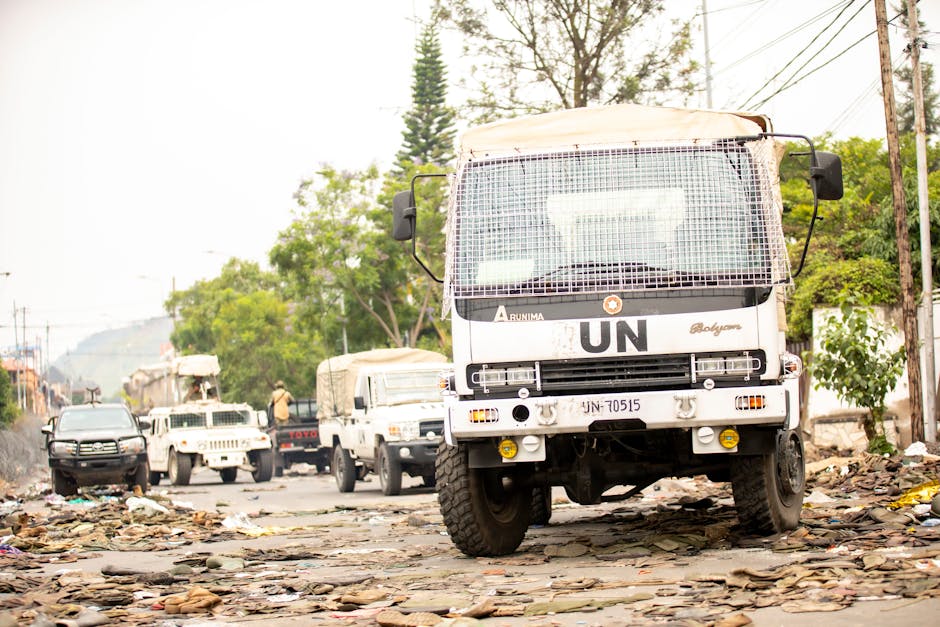
MAIDUGURI, Borno State – The news hit like a dry season wind, whispering through the already struggling communities of Nigeria's North-East: the United Nations is scaling down its humanitarian intervention. For millions, particularly in Borno, Adamawa, and Yobe (BAY) states, where conflict, displacement, and hunger have become daily companions, this isn't just a policy shift; it's a stark reminder that the fight for survival just got tougher.
Imagine Mama Halima, a mother of five in a dusty IDP camp near Maiduguri. Her youngest, Fatima, is already battling malnutrition, her tiny ribs showing through her clothes. For years, the sight of a UN-marked vehicle brought a flicker of hope – food rations, medical supplies, a sense that the world hadn't completely forgotten them. Now, that lifeline is shrinking. This isn't just about big global organisations pulling back; it's about the very real impact on the plates of families like Mama Halima's, the medicines for their sick children, and the fragile peace in communities pushed to their very limits.
What Is Happening on the Ground
The United Nations has announced a significant transition, aiming to shift the coordination and leadership of humanitarian interventions in Nigeria to local authorities and institutions. This means the UN Office for the Coordination of Humanitarian Affairs (OCHA), which has long been at the forefront of the response, will be scaling back its central role. While the UN insists this is a 'transformation' and not an 'abandonment,' designed to put Nigerian institutions and communities 'at the forefront of humanitarian action' sustained by domestic funding, the timing raises serious concerns.
For over a decade, the North-East has been grappling with one of the world's most severe humanitarian crises, largely driven by the Boko Haram insurgency and other armed groups. Millions have been displaced, livelihoods destroyed, and basic services crippled. In 2024, an estimated 7.7 to 7.9 million people in Borno, Adamawa, and Yobe states alone required humanitarian assistance, with 1.6 million still displaced. These numbers highlight a persistent crisis where extreme deprivation, protection concerns, and daily threats to well-being are rampant.
“The era of internationally financed, internationally delivered humanitarian operations in Nigeria is drawing to a close. The next phase belongs to Nigeria itself.” This statement, though from an earlier report about a 'Humanitarian Reset', resonates deeply with the current reality, emphasizing the monumental task now placed squarely on our national shoulders.
The Main Issues
The scaling down comes amidst a backdrop of persistently high humanitarian needs and drastically shrinking international funding globally. Aid agencies have been forced to make difficult operational decisions as resources dwindle, affecting critical interventions, particularly in conflict-affected areas. For instance, in 2025, global funding shortfalls already forced the World Food Programme (WFP) to scale down nutrition programmes in Nigeria, impacting over 300,000 children and leading to a deterioration of malnutrition levels from 'serious' to 'critical' in several northern states.
The move is part of a broader 'Humanitarian Reset' which advocates for a shift towards stronger in-country leadership and deeper engagement with affected communities. While the Nigerian government, through the Federal Ministry of Humanitarian Affairs and Poverty Reduction, has reaffirmed its commitment to providing policy direction and coordination, the critical question remains: is the nation adequately prepared to fill the massive gap left by international partners?
| Item | Cost (Early 2024) | Projected Cost (Mid-2026, Post-Scale Down) |
|---|---|---|
| 25kg Bag of Rice (Local) | N40,000 | N60,000+ |
| 5 Litres Palm Oil | N8,000 | N12,000+ |
| Crate of Eggs | N3,500 | N6,000+ |
| Total Estimated Cost | N51,500 | N78,000+ |
Note: These are illustrative estimates based on current inflation trends and market realities, particularly for staple foods which have seen price increases of over fourfold between 2020 and 2025/2026. Actual prices may vary by location and market dynamics.
The Impact on Daily Life
For the average Nigerian, especially those already living hand-to-mouth, this shift translates to even harder daily struggles. The North-East faces a severe protection crisis, with civilians constantly at risk of abduction, gender-based violence, forced recruitment, and exposure to improvised explosive devices. In IDP camps, overcrowded conditions, poor sanitation, and lack of basic necessities like food, clean water, and healthcare are already rampant. Children are at extreme risk of severe acute malnutrition, with projections indicating 1 million children under five in the BAY states could suffer from this life-threatening condition in 2026.
Food insecurity is projected to affect nearly 35 million Nigerians during the 2026 lean season, with 5.8 million of them in the BAY states alone. The scaling down of aid means less food assistance, pushing more families to the brink of starvation. Women and girls, who make up 8 out of every 10 people in immediate need, face heightened risks of sexual and gender-based violence (SGBV) as they venture out in search of food and firewood.
Youth survival is also critically impacted. With limited access to education and economic opportunities, young people in conflict-affected areas are highly vulnerable. Unemployment and underemployment are chronic, leading many to resort to negative coping strategies such as child labor, transactional survival activities, or even recruitment into armed groups. This withdrawal of international support, if not adequately matched by national efforts, could worsen an already desperate situation, increasing the pool of frustrated youth susceptible to radicalization or dangerous migration journeys. The absence of critical services like vocational training, which NGOs often provide, will further limit their pathways to sustainable livelihoods.
The broader economic environment in Nigeria, marked by high inflation, has already eroded purchasing power. The cost of essential food items has skyrocketed, with some staples increasing by over fourfold between 2020 and 2026. Families are already struggling to afford basic meals, and reduced humanitarian assistance will only compound this burden, making even local rice, which saw a 378% increase, a luxury.
What Needs to Be Done
This transition, while framed as an opportunity for Nigerian ownership, demands a robust, transparent, and immediate response from our government and civil society. Firstly, there must be a significant increase in domestic funding for humanitarian assistance. The 2026 Humanitarian Needs and Response Plan aims to support 2.5 million people in the BAY states with a funding requirement of US$516 million, prioritizing life-saving needs. The Federal and State governments must not only meet this funding but also ensure efficient and accountable disbursement, addressing the long-standing issues of mismanagement and corruption that have plagued past efforts.
Secondly, local organizations and community-based groups must be adequately empowered and resourced. They possess invaluable contextual knowledge, social legitimacy, and access to hard-to-reach areas that international actors cannot replicate. Investing in their capacity building, financial controls, and technical expertise is crucial for a sustainable and effective response.
Thirdly, security in the North-East must be drastically improved to allow for safe delivery of aid and to enable displaced persons to return to their homes and livelihoods without fear. Without enhanced security, long-term development and self-reliance remain elusive.
Finally, a coordinated, multi-sectoral approach combining emergency relief with long-term development initiatives is essential. This includes investing in food systems, basic services, disaster risk reduction, and anticipatory actions to reduce vulnerability. Education and youth empowerment programs, focusing on vocational skills and entrepreneurial training, are vital to prevent young people from falling into desperation and becoming targets for armed groups.
As the international community takes a step back, the spotlight is now firmly on Nigeria. This is our moment to rise to the occasion, to demonstrate true leadership, and to ensure that no Nigerian, especially those in the North-East, is left behind in their struggle for survival.