

nigeria 2027 election trendy and campaign, governors, president, youth, unemployement, and more
Nigeria's Looming Crisis: Billions Vanish as Governors Gear Up for 2027 Polls
153
Apr 08

Tap to Start Live Broadcast
Acoustic Enhanced Speech & Dynamic Visual Stream
As Nigeria approaches the 2027 elections, INEC warns that misinformation and AI-powered deepfakes are the gravest threat. Discover how Nigerian tech startups are fighting back and the urgent need for digital literacy amidst rising youth distrust and political shifts.
Intro: The digital battleground is set, and the stakes couldn't be higher. As Nigeria inches closer to the 2027 general elections, the Independent National Electoral Commission (INEC) finds itself in an escalating war against a formidable, shapeshifting enemy: misinformation and its insidious offspring, deepfakes. This isn't merely about political mudslinging; it's a direct assault on the integrity of the electoral process and the very foundations of democratic trust in Africa's largest economy. INEC Chairman, Professor Joash Amupitan, minced no words, declaring fake news amplified by media as the 'most dangerous weapon' threatening the upcoming polls, even eclipsing traditional physical disruptions. In an era where elections are increasingly 'won or lost in the digital arena,' the fight for truth has become Nigeria's defining tech and governance challenge.
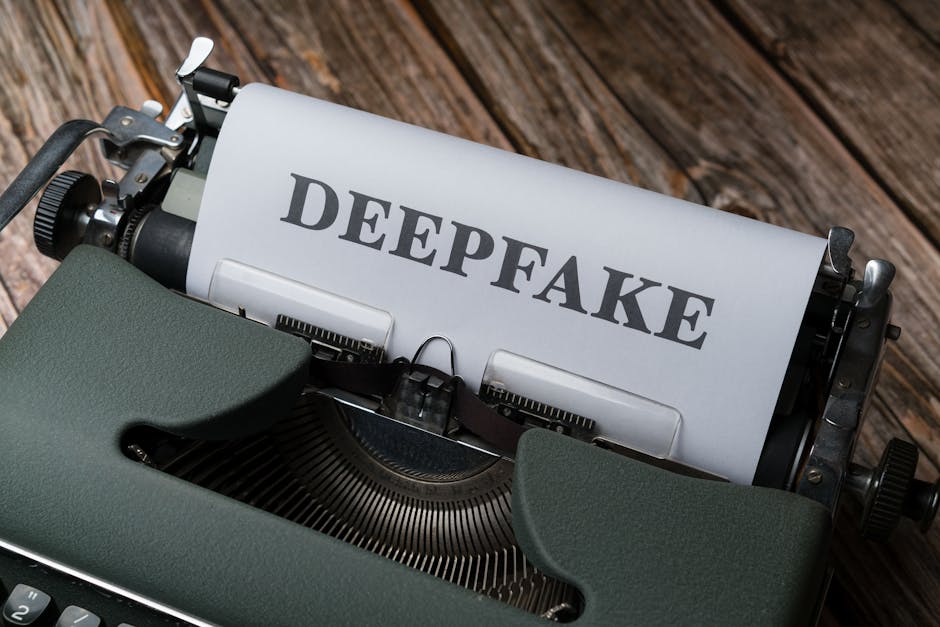
Nigeria is grappling with a 'qualitative shift' in the nature of election disinformation. The democratization of Generative AI (GenAI) means that sophisticated synthetic audio, deepfake videos, and hyper-targeted micro-narratives are no longer fringe tactics but potent tools for manipulation, poised to profoundly influence the 2027 electoral cycle. The echoes of the 2023 elections serve as a chilling precursor, where AI-generated audio allegedly implicating prominent political figures in rigging plots, and fabricated videos showing global celebrities endorsing candidates, spread like wildfire across social media. These 'shallow fakes' and more advanced deepfakes, often disseminated through private messaging platforms like WhatsApp, complicate monitoring and response efforts, eroding public trust and deepening political polarization.
Professor Amupitan, addressing the 81st General Assembly of the Broadcasting Organisations of Nigeria (BON) in April 2026, emphasized that the 'airwaves have become the primary infrastructure of our democracy'. He warned that if these airwaves are 'clouded by misinformation, the sovereign will of the people is threatened'. The Electoral Act 2026, hailed as a significant milestone, introduces provisions to regulate political advertising, ensure equitable access to broadcast platforms for all 22 registered political parties, and curb hate speech. Penalties for violations are stringent, including fines of up to N5 million for media organizations and potential imprisonment for individual officers. A mandatory 24-hour 'cooling-off period' before Election Day aims to shield voters from last-minute manipulation.
“In the 2027 General Election, the most dangerous weapon will not be a ballot-snatcher's gun, but a smartphone-user's lies amplified by an uncritical broadcast station,” Amupitan powerfully articulated. This insight underscores the shift from physical electoral fraud to digital manipulation as the paramount threat.
The impact of this digital deception is acutely felt by Nigeria's vibrant youth population. A January 2025 Citizen Report revealed alarming statistics: six in ten Nigerian youths now actively avoid politics due to the pervasive spread of fake news, and a staggering 73 percent express distrust in INEC's ability to conduct credible elections. This erosion of trust threatens to exacerbate voter apathy, a critical concern for democratic participation. Communication and media researcher Maryam Lasisi Mustapha highlighted that young Nigerians, aged 18-35, are particularly susceptible to manipulation due to a lack of resources and skills to discern authentic news from falsehoods.
Beyond misinformation, the broader political landscape for 2027 is also witnessing significant shifts. As of April 2026, the ruling All Progressives Congress (APC) has consolidated considerable power, controlling no fewer than 31 of the 36 state governorships. This trend of defections from opposition parties raises concerns about Nigeria's 'gradual slide from a multi-party democracy to a one-party system,' potentially narrowing electoral choices and stifling democratic growth. Such a concentration of power also intensifies concerns about unequal media access and the commercialization of airtime, which could further disadvantage smaller parties and independent voices despite the provisions of the Electoral Act 2026.
In response to the growing threat, Nigeria's dynamic tech ecosystem is stepping up. March 2026 saw the unveiling of BAT-BOT AI by Gunu Usman, founder of LYT24 Technologies. This AI-powered civic information and fact-verification platform, accessible across WhatsApp, X, Telegram, and a dedicated web interface, aims to provide citizens with verified information and counter false narratives. Similarly, the Brain Builders Youth Development Initiative (BBYDI) developed FactCheck Africa, an AI-powered tool leveraging credible news sources to verify claims in English, Hausa, Yoruba, Igbo, and French, demonstrating a localized approach to the problem. Even before these, the Nigerian startup SquirrelPR (as of October 2023) emerged as a media relations tool designed to connect organizations with credible newsrooms to combat disinformation, explicitly mentioning the disruptive influence of generative AI.
The Centre for Crisis Communication (CCC), in collaboration with the Federal Ministry of Information, NITDA, EFCC, NUJ, and CSOs, also announced plans in March 2026 to establish a National Crisis Communication Hub (CCHub). This hub will utilize AI-driven media monitoring and social listening tools (like PRrev) to detect and counter fake news in real-time, highlighting a multi-stakeholder approach to information management. These innovations are crucial, especially given that 88% of Nigerian adults have interacted with an AI chatbot, and 39% use AI frequently, indicating a vast addressable market for such solutions.
While specific funding rounds for these anti-misinformation startups were not explicitly detailed in the latest reports, the broader African tech funding landscape offers a promising outlook. In November 2025, Ventures Platform announced a significant first close of $64 million for its VP Pan-African Fund II, specifically targeting priority sectors including Artificial Intelligence. This signals increased investor appetite for AI-driven solutions across the continent. Similarly, Co-creation HUB Africa (CcHUB) actively deploys catalytic capital into high-growth companies leveraging technology, including those in digital security and governance, providing a potential avenue for further investment. The European Commission's NGI TrustChain initiative, having awarded €1.8 million in grants to European startups combating misinformation with blockchain, underscores a global recognition of this critical sector, which could indirectly attract more investment and attention to Nigerian counterparts.
The fight against misinformation ahead of Nigeria's 2027 elections demands a comprehensive, multi-pronged strategy. INEC's Chairman Amupitan has rightly called for enhanced collaboration between INEC and the National Broadcasting Commission (NBC), coupled with clearer guidelines for equal media access and robust fact-checking systems. Media organizations must prioritize 'truth and professionalism over profit' and 'fact-check in real-time', actively combating fake news and mobilizing citizens for higher voter turnout.
Beyond regulation and traditional media, sustained investment in and widespread adoption of innovative tech solutions are paramount. The emergence of platforms like BAT-BOT AI and FactCheck Africa signals a promising trajectory, but these efforts require scaling, sustained funding, and broader public awareness campaigns. Furthermore, there's a critical need for digital literacy initiatives, especially targeting youth, to equip them with the skills to identify and resist misinformation. As the 'main battleground for political narratives has shifted to the smartphones of millions of Nigerians', strengthening institutional capacity to verify information rapidly and respond effectively before false narratives take hold is non-negotiable. Nigeria's democratic future hinges on its ability to navigate this complex information environment, fostering an informed electorate capable of making decisions based on truth, not lies.