Politics & Government
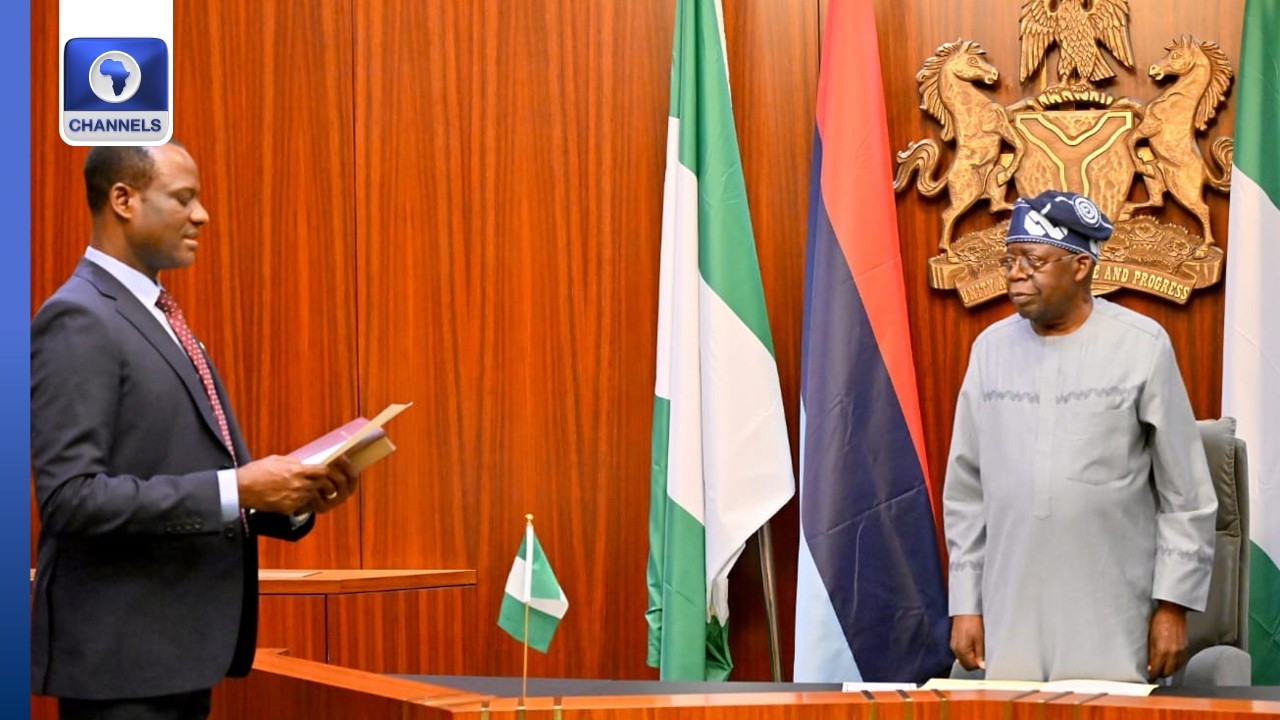
Nigerian President Tinubu Swears in Taiwo Oyedele as Minister of State for Finance
174
Mar 16

Tap to Start Live Broadcast
Acoustic Enhanced Speech & Dynamic Visual Stream
Nigeria's anti-graft war intensifies as ex-Minister Saleh Mamman is jailed for 75 years over N33.8bn fraud. This landmark conviction, amidst rising poverty and youth unemployment, signals a critical shift ahead of the 2027 elections, impacting public trust and policy reforms.
Intro: In a groundbreaking legal development reverberating across Nigeria's political and economic spheres, former Minister of Power, Saleh Mamman, has been handed an unprecedented 75-year jail sentence for his involvement in a N33.8 billion fraud and money laundering scheme. This landmark conviction, delivered in absentia by the Federal High Court in Abuja on May 13, 2026, signals a significant escalation in the nation's anti-graft war, sending a stern warning to public officials ahead of the pivotal 2027 general elections.
The Federal High Court, presided over by Justice James Omotosho, found Saleh Mamman guilty on all 12 counts of fraud and money laundering charges preferred against him by the Economic and Financial Crimes Commission (EFCC). The charges meticulously detailed how Mamman, who served as Minister of Power under former President Muhammadu Buhari from August 2019 to September 2021, diverted public funds totaling approximately ₦33.8 billion.
These colossal sums were specifically earmarked for critical national infrastructure projects: the Zungeru and Mambilla hydroelectric power projects, initiatives vital to addressing Nigeria's persistent power deficit. The court, in its judgment on May 7, 2026, convicted Mamman in absentia, a move underscored by his deliberate absence from court sessions. Justice Omotosho explicitly stated that the former minister's evasion was a calculated attempt to frustrate the administration of justice.
The sentencing, delivered six days later, saw Mamman receive seven years on ten counts, three years on one count, and two years on another, with all sentences ordered to run consecutively. This cumulative 75-year term is widely regarded by legal analysts as the stiffest custodial sentence ever imposed on a serving or former government minister in Nigeria's history. The court further mandated the forfeiture of various foreign currencies recovered from Mamman, alongside four choice properties traced to him in Abuja. An arrest warrant has since been issued, with the sentence officially commencing from the day of his apprehension.
The EFCC's diligent prosecution was highlighted, having presented 17 witnesses and tendered 43 exhibits to establish Mamman's culpability beyond reasonable doubt. This decisive action has been met with commendation from civil society organizations like the Human Rights Writers Association of Nigeria (HURIWA), which praised both the EFCC and the judiciary for a judgment that bolsters accountability and public trust in the justice system.
“The conviction sends a strong message that public office must never be treated as an avenue for personal enrichment, but rather as a trust that must be discharged with integrity and accountability.” — HURIWA
The conviction of Saleh Mamman is not an isolated incident but a significant victory within Nigeria's broader, intensified anti-corruption campaign. The Economic and Financial Crimes Commission has demonstrated remarkable resolve, securing 1,417 convictions in just the first and second quarters of 2025 alone. This aggressive stance is critical in a nation grappling with the devastating economic costs of corruption.
Estimates suggest that corruption could strip Nigeria of up to 37% of its Gross Domestic Product (GDP) by 2030, amounting to nearly $2,000 per person. Since independence, corruption is estimated to have cost the Nigerian economy more than $550 billion. These figures paint a grim picture, directly correlating with the nation's struggles with poverty and unemployment.
The alarming disparity in youth unemployment statistics (6.5% by ILO vs. 53% by ActionAid) often reflects different methodologies, with the latter likely capturing broader underemployment and discouraged workers. Regardless, the core message is clear: a significant portion of Nigeria's vibrant youth population faces immense economic challenges, exacerbated by funds diverted through corruption. The World Bank projects that while poverty, measured against the national poverty line, is expected to fall slightly in the near term, it will remain high, declining to about 50.5% in 2026 from 50.9% in 2025 (international poverty line).
The impact of this monumental fraud is stark when visualized:
N33.8bn
(Mamman Fraud)
$550bn+
(Total Corruption Cost Since Independence)
The Mamman conviction resonates far beyond the courtroom, deeply influencing Nigeria's market perception and policy trajectory, especially as the nation gears up for the 2027 elections. Such high-profile judgments serve as a crucial barometer for investor confidence. While direct foreign investment has been historically hampered by perceptions of corruption, decisive legal action like this can signal a genuine commitment to rule of law, potentially attracting new capital.
Politically, the escalating anti-graft war directly impacts the landscape of the 2027 elections. Corruption and its combat are central themes in Nigerian politics, influencing public trust and voter behavior. The government's influence over anti-corruption bodies is enormous, and perceptions of judicial integrity are crucial. The fact that Mamman was reportedly involved in political activities, including purchasing a governorship nomination form in Taraba State even as his trial proceeded, highlights the entrenched nature of political ambition despite legal woes.
Concerns have already been raised by organizations like ActionAid Nigeria regarding the misuse of public funds for political campaign activities ahead of the 2027 elections, warning that this could undermine democratic processes and give incumbents an unfair advantage. Therefore, such convictions are not just about justice but about shaping the narrative and integrity of the electoral cycle.
For Nigeria to truly win its war against corruption and foster sustainable development, several critical changes are imperative. First, the independence and capacity of anti-graft agencies like the EFCC and ICPC must be continuously strengthened, free from political interference. Their efforts must translate into more convictions and significant asset recoveries that are visibly reinvested into public services.
Second, judicial reforms are essential to ensure the speedy and unbiased dispensation of justice, particularly in high-profile corruption cases. Concerns about delays in high-profile cases have been voiced even by EFCC and ICPC chairmen. Implementing time-bound trials for corruption, similar to election petitions, could significantly improve efficiency. Transparency in judicial processes and consistent application of penalties will restore public confidence and deter future illicit activities.
Third, there must be a concerted effort to address the systemic drivers of corruption, including improving public finance management, strengthening institutional accountability, and fostering a culture of integrity across all levels of government. The Oronsaye restructuring of government services and new digital payment laws, as highlighted in a 2026 review, are steps in the right direction, but structural drivers and poor institutions remain challenges.
Finally, sustained civic engagement and education are vital. Citizens must remain vigilant, demanding transparency from their leaders and actively participating in the oversight of public funds. The media, acting as an investigative arm, plays a crucial role in exposing corruption and holding power accountable. The Mamman conviction, while a significant milestone, underscores the long and arduous journey ahead for Nigeria to eradicate corruption and build a truly equitable and prosperous society.