Politics
Osun Park Wahala: Who Is In Charge?
159
Jul 25
Tap to Start Live Broadcast
Acoustic Enhanced Speech & Dynamic Visual Stream
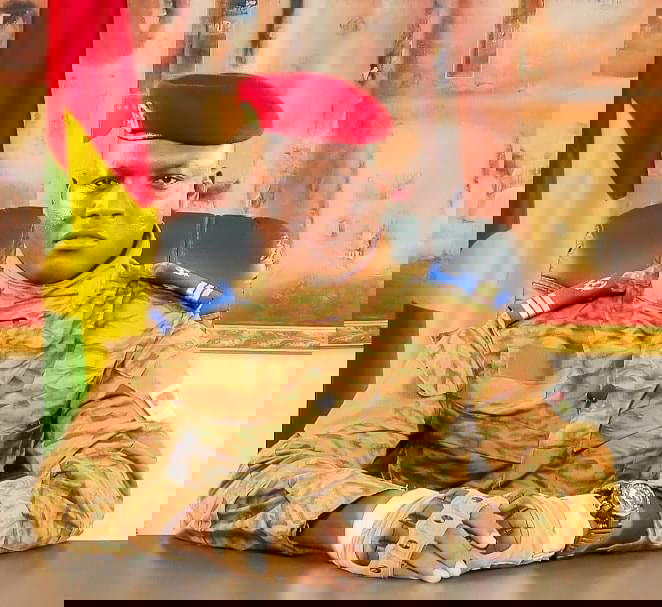
Burkina Faso's military leader, Ibrahim Traore, has issued a stern warning to challengers amidst rumors of a power struggle. This article explores the implications for daily life, governance, and regional stability in West Africa, detailing the impact on ordinary citizens.
Intro: You know that feeling when the price of garri suddenly jumps, or the fuel queue stretches for miles, all because of some rumour from the corridors of power? That knot in your stomach, wondering what fresh trouble awaits us, the ordinary citizens? Well, spare a thought for our brothers and sisters in Burkina Faso, because right now, that's their daily reality. Whispers of a fierce power struggle at the very top of their military government have erupted, and the man in charge, Ibrahim Traore, isn't mincing words. His recent declaration isn't just a political statement; it's a chilling pronouncement that echoes through the dusty markets and quiet homes, directly impacting the lives and livelihoods of everyday Burkinabe, and indeed, sending ripples across our West African sub-region.
Last week, Captain Ibrahim Traore, the young military leader who seized power in Burkina Faso in September 2022, sent a clear, undeniable message to anyone thinking of challenging his authority: “There can’t be two captains on one ship.” He delivered this warning to community leaders in Ouahigouya, northern Burkina, effectively stamping out growing speculation of infighting within his junta. The rumour mill has been working overtime due to the prolonged absence of two key figures in his military government – Oumarou Yabre and Farouk Azaria Sorgho. These aren't just any officials; Yabre is considered the second-in-command, heading intelligence services, while Sorgho is the junta's spokesman and commander of a powerful Rapid Intervention Battalion. Their vanishing acts have fuelled intense talk of a deep rift within the military hierarchy.
“If anyone screws up, I’ll take you down without a second thought. There are no strongmen around me,” Traore reportedly threatened, a statement that speaks volumes about the climate of fear and control he intends to enforce.
Yabre, who hasn't been seen in public since late May, usually attends important national ceremonies. His absence from the traditional flag-raising ceremony at the presidency and a recent promotion event for senior officers has raised serious eyebrows. Security officials, speaking anonymously, revealed that Yabre has stopped reporting to his office and his home security detail has been drastically cut. To further complicate matters, several of his close associates, including a prominent Islamic preacher, Ishaq Kindo, have reportedly been abducted or arrested. Kindo himself had been critical of a new bill regulating religious freedoms, a move Traore bluntly condemned, calling Kindo “fundamentally bad.” Even two officials close to Yabre were swiftly removed from their posts by presidential decree on June 17, one being the CEO of the National Hydrocarbons Company and the other a ministerial advisor for youth affairs.
Sorgho, the charismatic third-in-command, has also been missing from the public eye since mid-May. His battalion, No 4, has since been taken over by his deputy. Even more alarmingly, security officials allege that Sorgho himself has been ‘abducted’ by Traore’s associates, and his father, a former minister, was also arrested and 'abducted' by armed men.
This situation isn't just about two men missing; it's about the very fabric of governance in Burkina Faso. When military leaders come to power, they often promise stability and a swift return to order, but what we often see is a consolidation of power that stifles dissent and creates an environment ripe for internal struggles. Traore's stern warnings and the alleged disappearances of key figures paint a clear picture of an authoritarian grip tightening on the nation. This isn't just a Burkinabe problem; it’s a West African crisis. Each coup, each instance of military infighting, chips away at the democratic aspirations of our continent. It sends a message of instability, discourages foreign investment, and ultimately, pushes genuine development further out of reach. For a region like ours, still grappling with security challenges and economic hardship, such political volatility is a dangerous precedent that could easily spill over borders, threatening regional stability.
For the ordinary Burkinabe, this isn't abstract politics; it’s a matter of daily survival. When power struggles intensify, the state often diverts resources towards maintaining control rather than providing essential services. This means less money for schools, hospitals, and infrastructure. The economy takes a hit, driving up the cost of living. Imagine the fear of going about your daily business when security operations intensify, roads are rerouted, and checkpoints become a common sight around the presidential palace. This creates an atmosphere of anxiety, making simple tasks like commuting to work or trading goods much harder.
Youth survival is particularly at risk. In a country already facing significant challenges, political instability means fewer job opportunities, a greater struggle to access education, and a crushing sense of hopelessness. Many young people, seeing no future at home, may contemplate dangerous migration routes, further exacerbating the region's brain drain. The promise of change that often accompanies a coup quickly dissipates, replaced by the harsh reality of suppressed freedoms and economic stagnation. For Nigerian traders who venture across West Africa, this kind of instability means disrupted supply chains, increased risks, and potential losses. It impacts regional trade and the very livelihoods of those who depend on a stable environment for their businesses.
Let’s look at how such instability often reflects in market prices:
| Commodity | Before Coup (Sept 2022) | Now (July 2026) |
|---|---|---|
| 50kg Bag of Local Rice | 20,000 CFA | 35,000 CFA |
| Litre of Petrol | 700 CFA | 1,000 CFA |
*Prices are illustrative and reflect common trends during political instability.
As journalists, our role is to highlight these realities, to give a voice to the voiceless, and to push for accountability. For the leaders of Burkina Faso, the focus must shift from internal power struggles to the welfare of their citizens. True leadership lies in fostering an environment where people can thrive, not merely survive under the constant threat of political upheaval. This means prioritizing genuine security that protects civilians, not just regimes. It means investing in education, creating jobs for the youth, and upholding human rights, including freedom of expression.
For the wider West African community and bodies like ECOWAS, there needs to be a stronger, more unified stance against unconstitutional changes of government and the subsequent suppression of dissent. Regional stability is a collective responsibility. Dialogue, diplomacy, and robust democratic institutions are the only sustainable path forward. We must resist the temptation to normalise military rule and instead champion governance that is transparent, inclusive, and truly serves the people. Our collective future in Africa depends on leaders understanding that their strength lies not in suppressing rivals, but in empowering their citizens and building nations where prosperity and peace are not just distant dreams, but tangible realities for everyone, from the bustling markets of Ouagadougou to the streets of Lagos.