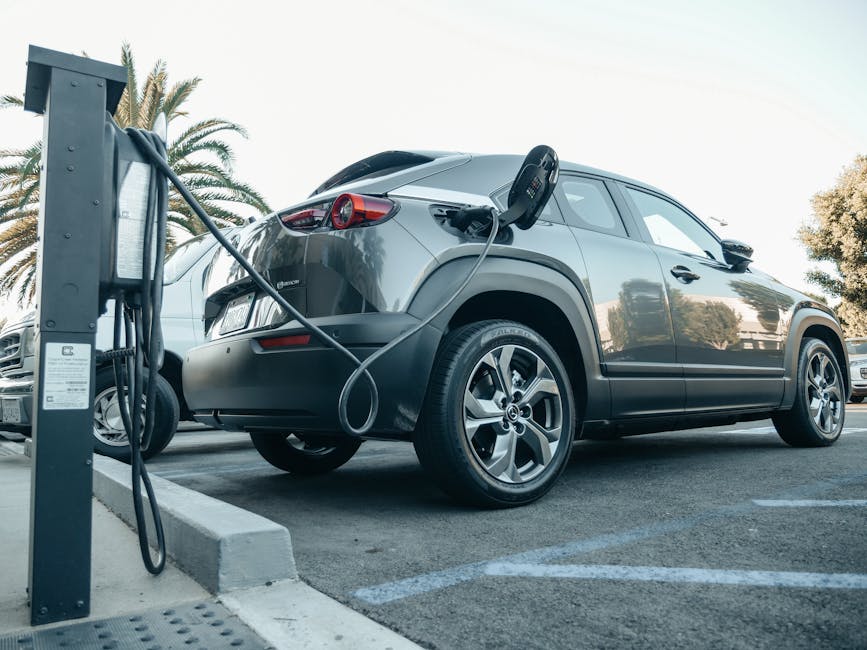
A new wave of research and real-world market dynamics suggests that electric vehicles (EVs) are on the cusp of becoming more affordable than their petrol-powered counterparts across Africa, a monumental shift predicted to occur well before 2040. This economic tipping point, once thought decades away, is being accelerated by rapidly falling battery costs, surging global EV production, and Africa's abundant solar resources. However, the continent's journey towards widespread EV adoption hinges critically on addressing entrenched financing barriers that currently inflate the total cost of ownership.

Recent analysis, notably a study published in Nature Energy and highlighted by MIT Technology Review in February 2026, posits that when paired with off-grid solar charging systems, EVs could achieve cost competitiveness across most of Africa before 2040. For electric two-wheelers, this parity could arrive even sooner, potentially by the end of the current decade. The operational savings are already striking: in Kenya, driving 100 km in a light-duty EV costs a mere $0.62–$0.92, dramatically less than the $6.62 incurred by an internal combustion engine (ICE) vehicle for the same distance. Furthermore, EV maintenance costs are typically 40%–60% lower than those for petrol cars, owing to fewer moving parts and the elimination of oil changes. Over an eight-year period, an EV could incur approximately $9,800 in combined maintenance and charging costs, whereas a comparable ICE vehicle might demand around $20,100 in expenses.
The Dual Forces: Falling Battery Costs and Soaring Petrol Prices
The accelerated trajectory towards EV affordability is fueled by two primary forces. Globally, battery prices are experiencing a dramatic decline. Industry forecasts indicated a nearly 50% drop in lithium-ion battery costs between 2023 and 2026, reaching an average of $80 per kilowatt-hour by 2026, a benchmark Goldman Sachs Research identifies for achieving ownership cost parity with gasoline cars in the U.S.. This global trend inevitably cascades into the African market.
Concurrently, petrol prices across many African nations continue their volatile ascent, driven by geopolitical tensions and supply chain disruptions. As of March 2026, countries like Malawi faced petrol prices as high as $2.858 per litre, while Nigeria saw prices surpass ₦1,000 per litre, representing a 39.5% surge since February 23, 2026, making it the second-highest increase globally. South Africa also anticipates further petrol and diesel price increases by mid-April 2026. These escalating fuel costs significantly enhance the economic appeal of electric alternatives, making the higher upfront EV sticker price easier to offset over the vehicle's lifespan.

Navigating the Financing Chasm: Africa's Primary Hurdle
Despite the compelling total cost of ownership advantages, the primary impediment to widespread EV adoption in Africa remains the initial purchase price and the associated financing. EVs still carry a higher upfront cost compared to their ICE counterparts. However, the more critical issue lies in the limited access to affordable financing and the prohibitively high borrowing costs prevalent in many African markets. Research indicates that in some cases, financing costs can even exceed the vehicle's initial purchase price, effectively delaying the point of economic parity despite technological cost reductions. High interest rates and risk premiums render electric vehicles unaffordable for a significant portion of the African populace. A recent study highlighted that for over half the African countries examined, financing costs would need to decrease by 7-15 percentage points for EVs to achieve cost parity with conventional vehicles by 2030. This reduction alone could shave thousands of dollars off lifetime financing expenses, transforming an unaffordable vehicle into an accessible one.
'The main challenge is not whether electric mobility makes sense technically for the African context – it does – but rather, how to make financing work at scale.'
— Noll (ETH Zürich Researcher), EurekAlert!
Innovative Pathways to Parity: Policy, Partnerships, and Pioneering Models
Recognizing the urgency, African governments, financial institutions, and the private sector are rolling out innovative solutions to bridge the financing gap:
- Government Incentives and Policy Frameworks: Countries are increasingly implementing supportive policies. South Africa, for instance, introduced a significant investment allowance from March 1, 2026, offering manufacturers a 150% tax deduction on qualifying investments in EV production. Rwanda has eliminated VAT on EV imports and capped electricity tariffs for charging. Ethiopia banned ICE vehicle imports in 2024 and offers duty-free access for EV assembly kits. Kenya launched its National Electric Mobility Policy in early 2026, outlining fiscal incentives, infrastructure rollout, and support for local manufacturing. Nigeria recently signed an agreement with South Korea to establish a 300,000 EV manufacturing plant, signaling a robust move beyond imports. However, only 39% of African nations currently offer binding EV incentives, underscoring the need for broader governmental commitment.
- Creative Financing Models: To mitigate high upfront costs, models like Pay-As-You-Go (PAYG) systems and Battery-as-a-Service (BaaS) are gaining traction, especially for electric two- and three-wheelers. Microfinance solutions, such as those offered by M-KOPA and Watu Credit in Kenya, are making electric motorcycles accessible through flexible payment plans.
- International and Private Sector Investment: Development finance institutions like the African Development Bank are providing concessional loans to support EV adoption. Private sector engagement is also robust, with companies like Spiro securing $50 million in debt financing to expand its battery-swapping network across Kenya, Uganda, Rwanda, Nigeria, Benin, and Togo. Other firms, including Arc Ride and Gogo Electric, have also attracted significant equity and electrification financing.
The influx of Chinese EV manufacturers, offering more cost-effective models, is also a critical factor. BYD's launch of the Dolphin Surf in South Africa at R340,000 (approximately $19,865) marks a significant milestone as the first EV priced under R400,000 in the market.
Charting the Future: Operational Cost Savings Drive the Green Transition
*Indicative 8-year operating costs (maintenance + fuel/charging) for EV vs. ICE in Africa (Source: EV24.africa, 2026)
The chart above visually underscores the long-term economic advantages of EVs, even as upfront costs remain a hurdle. This disparity in operational expenditure is a powerful incentive for the transition, particularly for high-mileage commercial drivers and fleet operators.

The Road Ahead: Unlocking Africa's Green Mobility Potential
As of March 2026, the African EV market, while still nascent (less than 1% of total on-road vehicles), is projected for significant growth, with estimates ranging from a CAGR of 10.20% from 2025 to 2033 to a soaring 56.3% from 2025 to 2030, potentially reaching a market size of over $4.2 billion by 2030. The confluence of technological advancements, plummeting battery costs, and escalating fossil fuel prices presents an unprecedented opportunity for Africa to leapfrog traditional automotive development. However, realizing this potential demands a concerted, multi-pronged approach to dismantle the financing barriers. De-risking financial investments through government guarantees, fostering innovative lending models, and attracting sustained international support will be paramount. With strategic policy alignment and robust financial mechanisms, Africa stands poised to lead a transformative shift towards sustainable and economically viable electric mobility.