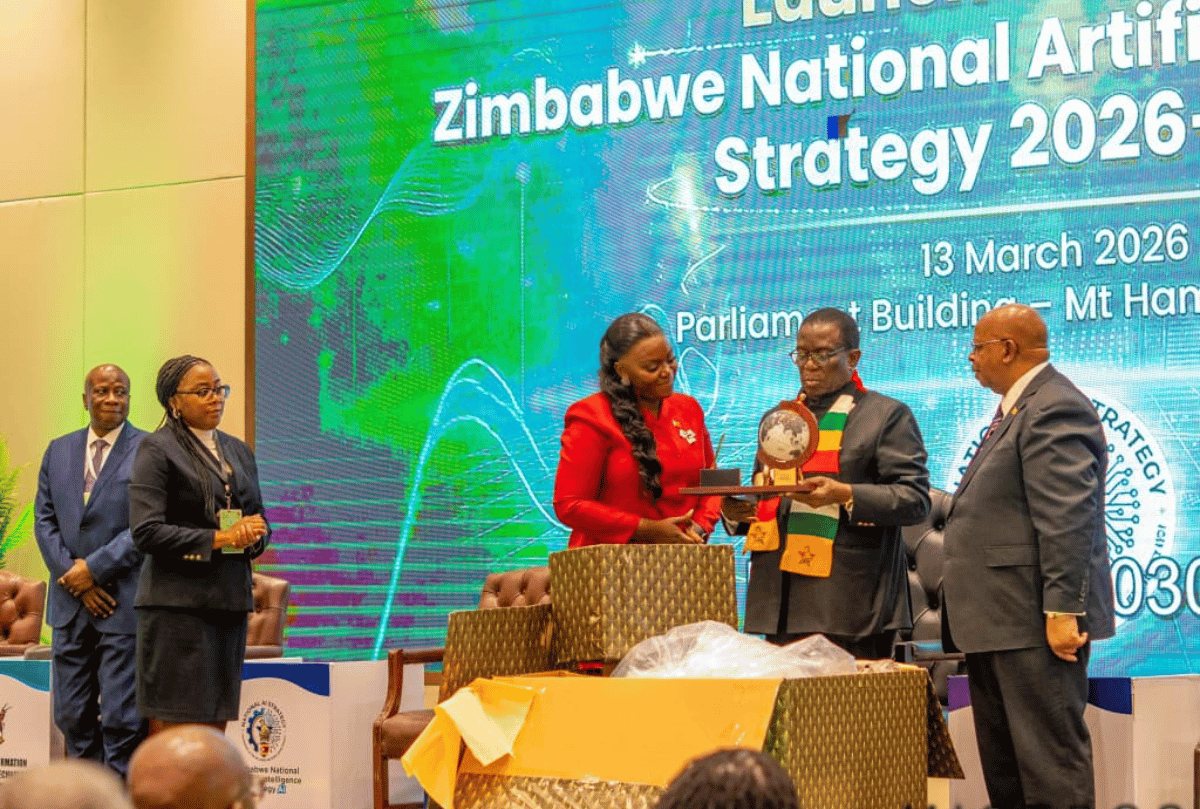
Harare, Zimbabwe – In a definitive stride towards solidifying its position within the Fourth Industrial Revolution, Zimbabwe officially launched its National Artificial Intelligence (AI) Strategy for 2026–2030 on March 13, 2026. The comprehensive roadmap, unveiled at the Parliament of Zimbabwe in Mt Hampden, is designed to leverage AI as a fundamental driver for economic growth, innovation, and inclusive national development, aligning firmly with the country's broader Vision 2030 objectives.

The momentous launch was presided over by the Minister of ICT, Postal and Courier Services, Honourable Tatenda Annastacia Mavetera, with President Dr. Emmerson Dambudzo Mnangagwa gracing the event as Guest of Honour. Minister Mavetera underscored that the strategy is a 'home-grown blueprint' developed through extensive consultations, including input from a diverse array of stakeholders ranging from farmers and healthcare professionals to entrepreneurs, academics, civil society, and development partners. This consultative process was informed by the UNESCO Artificial Intelligence Readiness Assessment for Zimbabwe, ensuring a strategy tailored to the nation's unique needs and aspirations.
A Six-Pillar Foundation for AI-Driven Transformation
Zimbabwe's National AI Strategy is meticulously structured around six core pillars, each critical to fostering a robust and sustainable AI ecosystem. These include AI Talent and Capacity Development, focusing on education, training, and digital literacy from primary school to university levels, alongside the establishment of AI Centres of Excellence. Equally crucial are AI Infrastructure and Computational Sovereignty, which aim to strengthen digital infrastructure, ensure national control over data, and fully utilise the High Performance Computing Centre. The strategy also prioritises AI Adoption and Public Service Transformation, integrating AI across vital sectors such as agriculture, healthcare, education, mining, and public governance to enhance productivity and service delivery.
Further pillars encompass AI Governance, Ethics, and Regulatory Frameworks, ensuring AI development remains human-centred, transparent, and bias-free while protecting national interests. AI Research, Development, and Innovation are central to fostering a culture of technological advancement, supported by funding and institutional strengthening. Lastly, AI Strategic International Collaboration and Diplomacy are vital for positioning Zimbabwe as a key player in the global AI landscape.

To kickstart this ambitious agenda, five major initiatives are slated for rollout within the first 18 months. These include the 'AI Grand Challenge,' a national competition to spur innovative AI solutions; the 'National AI and Data Platform' (dubbed Pangolin / Haka / Inkakha), a secure hub for national datasets; and the 'AI for Every Zimbabwean – Nzwisiso.ai Campaign,' a nationwide awareness drive. Additionally, a 'National AI Regulatory Sandbox' (Innovation Crucible / Umthombo Wolwazi) will provide a testing environment for startups, complemented by the 'National AI Innovation Fund' (Mugove / Umqele / Isabelo), a co-investment mechanism for emerging AI ventures.
As of the UN 2024 E-Government Development Index, Zimbabwe ranks 149th out of 193 countries, indicating significant digital gaps that the National AI Strategy aims to address and bridge. This strategic deployment of AI is anticipated to be a critical accelerator in improving the nation's digital readiness and overall socio-economic development, thereby enhancing its global competitiveness.
Zimbabwe's AI Readiness Progression (Conceptual)
Note: Heights represent conceptual progression in AI readiness and implementation maturity.
The success of the National AI Strategy is critically dependent on robust governance. To this end, the government has established key institutions, including the National Digital Regulatory Committee (NDRC), the AI Strategy Implementation Office (AISIO), and various Technical Working Groups (TWGs), to ensure coordinated AI development across all ministries and sectors. These structures, coupled with the involvement of telecommunication giants like Econet Wireless Zimbabwe, NetOne, TelOne, Liquid Intelligent Technologies, and Huawei, highlight a collaborative approach to realizing Zimbabwe's digital future.