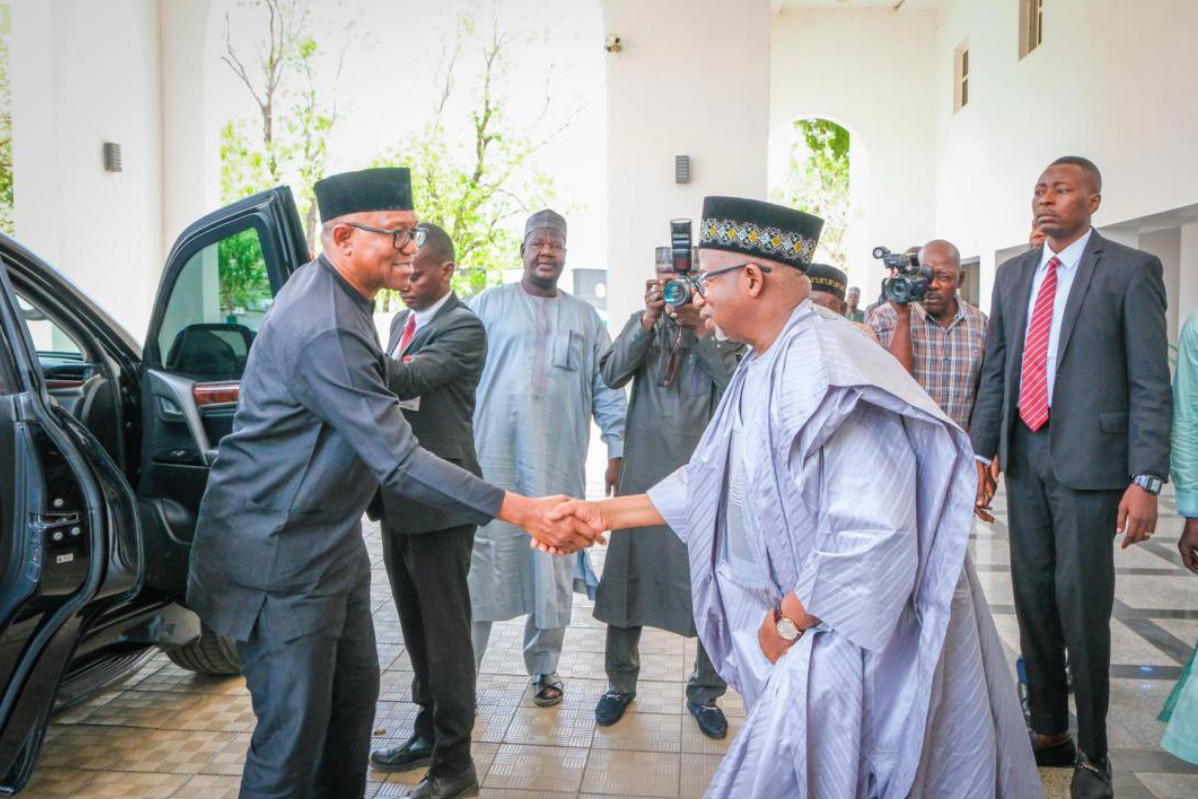
As Nigeria approaches another pivotal election cycle in 2027, the political landscape is once again dominated by discussions surrounding key figures and their blueprints for national progress. Among these, Peter Obi, the presidential candidate of the Nigeria Democratic Congress (NDC), continues to command significant attention. With a robust track record from his tenure as Governor of Anambra State and a clearly articulated vision for the nation, Obi's aspirations and proposals warrant a deep, fact-checked analysis as of November 2026.

A Legacy of Prudent Governance
Peter Obi's eight years as Governor of Anambra State (2006-2014) are often cited as a benchmark for fiscal responsibility and transformational leadership. His administration elevated Anambra's education ranking from 25th to 1st nationally in the West African Senior School Certificate Examination (WASSCE), a significant achievement attributed to strategic investments in ICT and a return of schools to missions. Security also saw dramatic improvements, with Obi's government providing over 500 security vehicles and fostering partnerships that reportedly led to five years without violent crime in the state.
Economically, Obi left a legacy of fiscal prudence, reportedly saving over $150 million in savings for the state, with no unpaid salaries, pensions, or contractor bills upon his exit. He initiated the first Sub-Sovereign Wealth savings in Sub-Saharan Africa and attracted major investments, including the SABMiller brewery and Innoson Motors plant, which became a significant source of internally generated revenue and employment. Infrastructure development was also prioritized, with over 800 kilometers of roads constructed, earning Anambra recognition for having the best road network in Nigeria by the Federal Ministry of Works. In healthcare, his administration built the first state-owned teaching hospital, upgraded numerous facilities, and received a $1 million award from the Bill and Melinda Gates Foundation for being the best-performing state in immunisation in the South-East.
'What we accomplished in Anambra can also be accomplished in Nigeria. With capable leadership, effective planning, responsible management and accountable institutions, Nigeria, too, can work for all its citizens.'
— Peter Obi
Blueprints for a Productive Nigeria
In November 2026, Peter Obi is actively campaigning, outlining a comprehensive agenda for the 2027 presidential election, centered on unity, security, economic productivity, and accountable leadership. His vision emphasizes a critical shift for Nigeria from a consumption-based to a production-driven economy. This economic transformation includes revitalizing agriculture, fostering industrialization, and significantly improving access to finance for Micro, Small, and Medium Enterprises (MSMEs), youth, and women to create jobs and reduce poverty.

Security remains a paramount concern, with Obi pledging decisive action against insecurity, ending banditry and insurgency, strengthening the national security architecture, and ensuring the safe return of internally displaced persons (IDPs). Human capital development is another core pillar, with plans to prioritize education and healthcare. He aims to establish a special task force to reduce the number of out-of-school children, strengthen Technical and Vocational Education and Training (TVET), and invest in world-class scholarship and research. Institutional reforms are also central, focusing on combating corruption, entrenching the rule of law, and establishing an honest and efficient civil service, while drastically reducing the cost of governance.
Obi's approach also includes building expansive, world-class infrastructure for power supply, rail, road, air transportation, and pipeline networks through integrated public-private partnerships. He has also articulated a regional development strategy designed to unlock the productive potential of every geopolitical zone in Nigeria. Fundamentally, Obi advocates for leadership based on character, competence, capacity, and compassion, urging Nigerians to reject ethnic or religious politics.
Anambra State Education Ranking (Pre-Obi vs. Obi Era)
Peter Obi's continued prominence in the Nigerian political discourse ahead of the 2027 elections underscores a consistent message rooted in his performance as a state governor and a clear vision for national renewal. His focus on fiscal discipline, human capital development, and transitioning to a productive economy resonates with a populace yearning for tangible change. As he engages with Nigerians across the country and internationally, his challenge lies in translating this established record and articulated vision into a broad-based mandate for the nation.