Intro: In our bustling markets, at the local buka, or under the shade of a mango tree, conversations often turn to the state of our nation. We talk about the rising cost of garri, the struggle for steady electricity, the dreams of our youth, and the ever-present challenge of keeping our communities together. Nigeria, a tapestry of vibrant cultures and resilient spirits, constantly navigates complex issues, and the voices that shape our public discourse are more crucial than ever. But what happens when powerful platforms amplify voices that seem to thrive on division, on half-truths, or even outright falsehoods? It's a question we must ask ourselves, not just about our own media landscape, but also when we observe trends from global stages, because the echoes often reach our shores, influencing perceptions and sometimes, even our very peace.
What Is Happening on the Ground
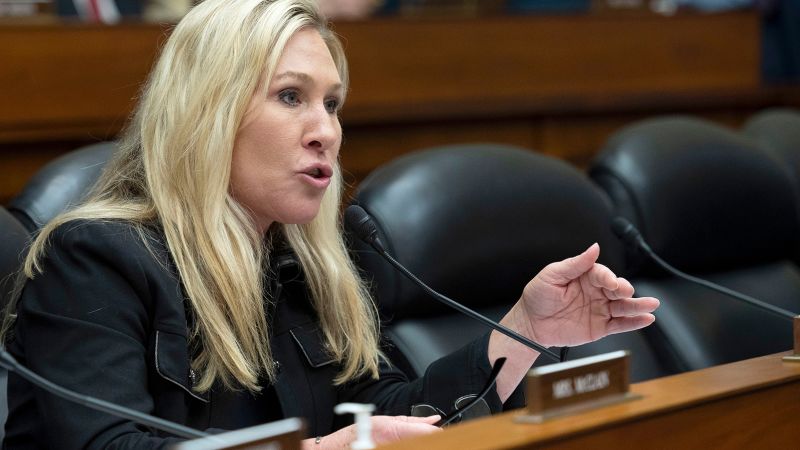
Recently, across the oceans, a significant debate unfolded around a prominent American lawmaker, Marjorie Taylor Greene, and her appearance on a respected news program, '60 Minutes.' This isn't about America's internal politics, but about a universal journalistic dilemma: when does giving airtime to a controversial figure cross the line from informing the public to inadvertently legitimizing harmful narratives? Greene, known for her 'sharp tongue' and 'radical views,' including promoting conspiracy theories about elections and even school shootings, has a history of making inflammatory statements. For many, including fellow politicians and journalists in the US, her interview on such a prime-time show felt like an endorsement, a move from the 'fringe to the GOP’s front row,' as one reporter put it.
Here in Nigeria, we understand this tightrope walk all too well. Our media landscape, a blend of traditional and digital platforms, faces challenges including misinformation and hate speech, which present significant integrity concerns. We've seen our own share of public figures, some in politics, some in religious garments, and others in new media, who peddle divisive rhetoric. They might spread rumours about elections being rigged, blame specific ethnic groups for economic woes, or even incite fear about public health initiatives. The Nigerian media has a constitutional duty to hold the government accountable and inform citizens, but also faces the challenge of responsible reporting in a diverse society. The difference, however, lies in how our media, both traditional and online, chooses to engage with such voices. Do we grant them unchallenged platforms, inadvertently giving their divisive messages more oxygen, or do we prioritize the stability and unity of our nation? The choices made in newsrooms, whether in Lagos or Washington, have real-world consequences, impacting everyone from the aspiring student in Kano to the struggling trader in Port Harcourt.
As one concerned elder from the community recently put it, 'When the talking drums beat a wrong rhythm, the whole village dances out of step. We must be careful who we allow to hold the drumsticks.'
The Main Issues
The core issue isn't simply about 'free speech' – a principle we Nigerians deeply cherish and fight for – but about the responsibility that comes with a public platform, especially when it reaches millions. When a politician promotes narratives that question the legitimacy of democratic processes, denies historical atrocities, or attacks vulnerable groups, the damage is profound. In Nigeria, such rhetoric, if left unchecked, can quickly inflame long-standing ethnic and religious tensions, particularly during election seasons. We’ve witnessed how quickly a rumour, amplified by a charismatic voice, can transform into street unrest, disrupting markets, closing schools, and costing lives.
Think about the recent past: campaigns built on division rather than development, social media narratives pitting one region against another, or false information about government policies causing widespread panic. The original article highlights Greene’s past claims about 'Jewish space lasers' causing wildfires or her attacks on gun violence survivors. While those specific claims might seem distant, the mechanism of using absurd or inflammatory conspiracy theories to gain attention and sow discord is eerily familiar in our own political landscape. The spread of misinformation is widespread in Nigeria, with 94% of respondents in one report encountering false narratives about political events, mostly on social media. This trend fuels distrust in institutions and weakens democratic participation. Such focus on sensationalism distracts from real issues like poverty, infrastructure, education, and healthcare, making genuine governance challenging when public trust is constantly eroded by sensationalism and unverified claims.

- Platforming divisive figures can legitimize harmful narratives, leading to real-world consequences like ethnic or religious tensions.
- Misinformation, especially around elections or public health, can destabilize communities and undermine trust in institutions.
- 62% of young Nigerians are discouraged from participating in politics due to misinformation.
- Youth are particularly vulnerable to online radicalization and the emotional appeal of sensational, yet often false, content.
- Focus on sensationalism distracts from critical development issues and weakens accountability.
The Cost of Division: A Local Lens
Comparing potential societal costs when divisive rhetoric takes centre stage.
Amplified Disinformation
- ▶ Cost in lost market days due to unrest: Billions of Naira Annually
- ▶ Drop in investor confidence: Significant (15-20% estimated in affected regions)
- ▶ Increased communal conflict: Measurable rise in tensions
- ▶ Erosion of trust in institutions: Widespread
Focus on Unity & Development
- ▶ Potential economic growth: +7-10% GDP (estimated with stability)
- ▶ Boost in local and foreign investment: Substantial
- ▶ Strengthened social cohesion: Measurable improvement
- ▶ Improved policy implementation & public services: Direct impact
Note: Figures are illustrative projections based on historical socio-economic trends and potential impacts of sustained political stability versus instability. Actual costs of conflict include loss of human life, which is incalculable.
The Impact on Daily Life
The implications of a media landscape that prioritizes sensationalism over substance, or controversy over communal harmony, are felt directly in our daily lives. Communal conflicts, often exacerbated by divisive narratives, significantly disrupt socio-economic activities, leading to destruction of farmlands, displacement of farmers, and declining trade due to insecurity. In affected states, conflicts have led to an average loss of 47% of taxes. Imagine a young graduate, bursting with ideas and eager to contribute, struggling to find a job because political instability, fueled by divisive rhetoric, scares away investors. The average household affected by farmer-pastoralist conflict, for instance, could see at least a 64% increase in income if these conflicts were reduced to near zero. Or a market woman, whose daily profits are cut short because a baseless rumour caused a panic, leading to clashes that shut down her stall.
When politicians use their platforms to attack entire groups or propagate conspiracy theories, it creates an atmosphere of suspicion and fear. This fear can prevent people from cooperating, from trusting their neighbors, and from participating fully in community development efforts. It can also divert government resources from essential services to managing conflict. The energy spent debating ludicrous claims could instead be used to address pressing issues like improving our health infrastructure, revitalizing our education system, or creating sustainable youth employment programs. The youth, especially, are caught in this crossfire. A recent report revealed that 62% of young Nigerians are discouraged from participating in politics due to misinformation. They are constantly bombarded with information, some true, much of it false, through their phones. Without critical media literacy, they can easily become pawns in political games, or worse, lose faith entirely in the possibility of a united, prosperous Nigeria. When truth is blurred, and accountability is dodged, it's the everyday Nigerian who pays the highest price – in peace, in prosperity, and in hope.
What Needs to Be Done
As a nation, we need to foster a robust culture of critical thinking and responsible media consumption. Our journalists, as gatekeepers of truth, have an immense responsibility to scrutinize, challenge, and contextualize. This means not just reporting what a controversial figure says, but why they say it, what their track record is, and what the potential impact of their words might be on our fragile social fabric. It's about 'holding the drumsticks' with care, as the elder said. Strengthening ethical standards, editorial oversight, and fact-checking practices are essential for maintaining public trust.
For our citizens, it means being vigilant consumers of news, questioning sources, and resisting the urge to share unverified information. Education plays a critical role here, equipping our youth with the tools to discern fact from fiction in an increasingly noisy digital world, potentially by integrating digital literacy into basic education and launching awareness campaigns where young people are most active. Our leaders, too, must understand that their words carry immense weight. They must be held accountable for rhetoric that incites division or undermines our shared values.
Ultimately, the future of our nation, its stability, and its progress, hinges on our collective commitment to truth, unity, and responsible dialogue. We cannot afford to give platforms, either intentionally or inadvertently, to voices that would tear us apart, especially when the challenges facing us demand our absolute unity and focus. Let us choose to amplify voices that build, rather than those that destroy; voices that unite, rather than those that divide; voices that shed light, rather than those that cast shadows over our collective future.