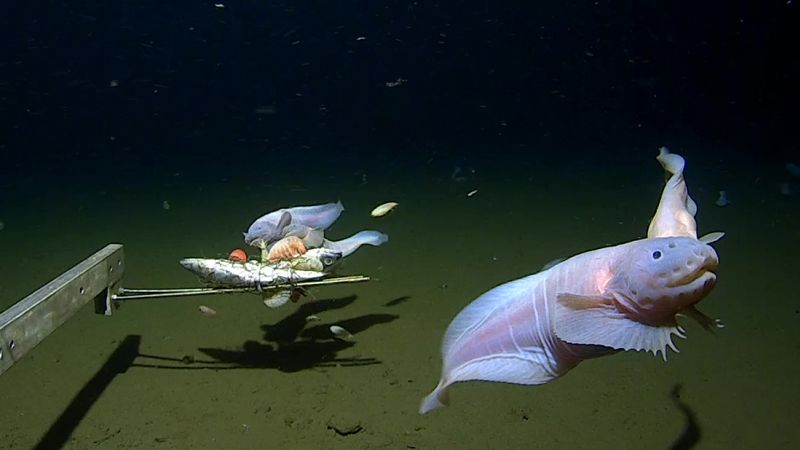
Intro: Imagine, my dear reader, a fish swimming calmly over 8,000 meters beneath the ocean's surface – a depth so profound it dwarfs our tallest mountains. While scientists marvel at this incredible discovery off the coast of Japan, here in Nigeria, it begs a crucial question: What mysteries lie beneath our own waves, and are we truly equipped to understand, protect, and harness the bounty of our blue economy for our people?
What Is Happening on the Ground
Just recently, the world watched in awe as a young snailfish was filmed cruising at an astounding 8,336 meters in the northern Pacific, setting a new record for the deepest fish ever observed by scientists. This isn't just a fascinating tale of marine biology; it's a testament to incredible scientific ingenuity and sustained investment in understanding our planet. Researchers from the University of Western Australia and Tokyo University of Marine Science and Technology used advanced sea robots to capture this historic footage, even managing to collect other specimens from over 8,000 meters – another record. This decade-long study, exploring the deep trenches off Japan, highlights the commitment of nations to push the boundaries of knowledge, revealing creatures with translucent bodies and tiny eyes, perfectly adapted to immense pressure. The lead scientist, marine biologist Alan Jamieson, noted that younger deep-sea snailfish often remain at such extreme depths to avoid predators in shallower waters, a remarkable survival strategy.
But as we applaud these monumental achievements far away, a different narrative unfolds closer to home. Nigeria, with its extensive coastline and rich maritime heritage along the Gulf of Guinea, possesses a vast potential for marine exploration and economic growth that often remains untapped, overshadowed by more immediate struggles. While foreign scientists delve into the unknown depths of distant oceans, many of our own coastal communities and marine researchers grapple with fundamental challenges – from basic equipment shortages to the urgent need for robust policies that protect our waters from overfishing and pollution.
As one local fisherman, Mallam Isa, often says by the Lagos lagoon, 'The ocean feeds us, but who feeds the ocean with our care and our knowledge?' This sentiment echoes the silent plea of countless Nigerians whose livelihoods depend directly on a thriving marine ecosystem.
The Main Issues
The discovery of the deepest fish serves as a stark reminder of the global race to understand and control marine resources. For Nigeria, a country with enormous maritime assets, this global trend underscores an urgent need for a strategic rethink of our 'blue economy.' Our coastal areas, which stretch for over 853 kilometers, are home to millions whose livelihoods are directly tied to the sea – fishermen, traders, transporters, and countless others. Yet, these communities face daily struggles: dwindling fish stocks due to illegal, unreported, and unregulated (IUU) fishing often perpetrated by foreign trawlers, marine pollution from oil exploration and domestic waste, and the persistent threat of coastal erosion. These issues don't just affect the environment; they hit hard at the very fabric of our society, exacerbating poverty and limiting opportunities, especially for our youth.
The sophisticated technology used by international scientists, like the deep-sea 'landers' costing over $200,000 each to assemble and operate, stands in stark contrast to the often-antiquated equipment available to our local researchers and even our naval patrols. This disparity isn't just about scientific bragging rights; it's about national sovereignty, economic security, and the ability to harness our natural endowments. The current reality is that while we have rich waters, much of the data on our marine life, especially in deeper zones, is either scarce or collected by foreign entities. This knowledge gap prevents us from effective resource management, conservation efforts, and the strategic planning needed to unlock the full potential of our ocean wealth. Furthermore, the high cost of sophisticated marine research and exploration is a significant barrier. While nations like Japan invest heavily in these long-term studies, Nigeria's budget for marine science and technology often pales in comparison, leading to a reliance on external data or a complete lack of understanding of our own deep-sea ecosystems. This impacts everything from sustainable fishing quotas to identifying potential new medicinal compounds or energy sources, thereby stifling innovation and economic diversification.

| Aspect | Deep-Sea Exploration (e.g., Japan Expedition) | Typical Nigerian Marine Research |
|---|---|---|
| Primary Goal | Discovery, scientific advancement, understanding extreme ecosystems, long-term global impact. | Sustainable fisheries, pollution monitoring, coastal protection, immediate economic impact, food security. |
| Technology & Equipment | Advanced ROVs (Remotely Operated Vehicles), autonomous landers ($200,000+ each), high-resolution cameras, deep-sea submersibles. | Basic research vessels, sonar, trawling nets, satellite imagery (often externally sourced), limited specialized deep-sea gear. |
| Funding Sources | Robust government grants, university endowments, international collaborations, long-term national strategic investment. | Limited government allocation, occasional international project grants, university budgets often severely stretched. |
| Timeline of Research | Multi-year to multi-decade programs (e.g., 10-year study off Japan for fish populations). | Often short-term, problem-based, immediate response, or limited by funding cycles. |
The Impact on Daily Life
When we speak of marine science and deep-sea discoveries, it might seem far removed from the everyday struggles of a Nigerian family. But the reality is, the health of our oceans directly impacts our pockets, our plates, and our future. For the youth, a vibrant blue economy means jobs – not just in traditional fishing, but in marine science, sustainable aquaculture, coastal tourism, environmental protection, and even innovative technology development. However, without proper investment in understanding and managing our marine resources, these opportunities remain largely theoretical. Many young Nigerians, seeing limited prospects in traditional sectors, often turn to informal economies or risk perilous journeys abroad. Imagine if the enthusiasm and curiosity sparked by discoveries like the deep-sea snailfish could be channeled into local initiatives, encouraging young minds to explore our own aquatic biodiversity or develop sustainable fishing practices.
The decline in fish catches, a direct consequence of poor marine governance, overexploitation, and pollution, means higher prices in local markets, making essential protein sources less accessible for ordinary families. Coastal erosion, exacerbated by climate change and unregulated sand dredging, displaces communities and destroys livelihoods, leading to internal migration and increased social pressure. The pollution from oil spills and plastic waste doesn’t just harm marine life; it contaminates the very waters our fishermen depend on, making their work harder and less profitable, often impacting their health. These are not abstract environmental concerns; they are daily struggles that dictate whether a family eats, whether a child goes to school, or whether a community can thrive and maintain its cultural heritage tied to the sea.
What Needs to Be Done
The path forward for Nigeria must involve a deliberate and sustained investment in our blue economy, mirroring, in spirit, the long-term vision displayed by nations engaged in deep-sea exploration. Firstly, Government Commitment is paramount. We need significantly increased budgetary allocation for marine research institutions, universities, and environmental protection agencies. This means providing funds not just for operational costs, but for modern equipment, research vessels, and cutting-edge technology relevant to our specific coastal and deep-sea challenges. This commitment must be consistent, not subject to political whims or short-term gains, fostering an environment where scientific exploration and conservation can flourish.
Secondly, Capacity Building for Youth must be a national priority. We must invest in STEM education with a strong marine science component, offering scholarships, internships, and mentorship programs that encourage young Nigerians to pursue careers in oceanography, marine biology, and sustainable aquaculture. This will not only create jobs but also build the indigenous expertise needed to understand and manage our resources effectively. Imagine Nigerian marine biologists, engineers, and conservationists leading expeditions in our own waters, uncovering our unique biodiversity.
Thirdly, Strengthening Regulatory Frameworks is crucial. Aggressive enforcement against illegal, unreported, and unregulated (IUU) fishing, stricter penalties for polluters, and clearer policies for responsible resource extraction are non-negotiable. This might involve collaborating with neighbouring African nations, such as Ghana or Cameroon, to patrol the Gulf of Guinea more effectively, sharing intelligence and resources to combat maritime crime and environmental degradation across shared borders. Such inter-African cooperation can amplify our collective strength and protect our joint marine heritage.
Fourthly, Community Engagement is vital. Our coastal communities are the frontline custodians of our marine environment. Empowering local fishermen with knowledge of sustainable practices, providing alternative livelihoods where necessary, and involving them in conservation efforts will foster a sense of ownership and responsibility. Their traditional knowledge, combined with modern science, can offer invaluable insights into managing our resources.
Finally, International Collaboration should be sought, not just for aid, but for genuine partnerships that transfer technology, share knowledge, and build our capacity, rather than simply relying on foreign entities to conduct research in our waters. This means negotiating agreements that prioritize Nigerian ownership of data and intellectual property. The discovery of the deepest fish reminds us that the ocean holds countless secrets and immense potential. For Nigeria, unlocking that potential means prioritizing our own blue wealth, investing in our people, and safeguarding our marine environment for generations to come, transforming our maritime potential into tangible prosperity for every citizen.