
Hardware & OS World
Edge of Tomorrow: Microsoft and Google's Fierce OS Battle for Smart Device Dominance in 2026
153
May 08

Tap to Start Live Broadcast
Acoustic Enhanced Speech & Dynamic Visual Stream
HP IQ is disrupting traditional operating systems with on-device AI, offering enhanced productivity, privacy, and seamless workflows. Explore its features, market impact, and challenges in 2026, with a focus on its implications for global and emerging tech ecosystems.
Intro: In a world constantly buzzing with new tech, it's easy to get lost in the noise. But every so often, a breakthrough emerges that doesn't just tweak existing systems but fundamentally redefines how we interact with our digital lives. As of April 2026, we're witnessing one such seismic shift: the 'On-Device AI Battle,' spearheaded by HP IQ, which is not just disrupting workspaces but challenging the very foundation of traditional operating systems. Imagine a future where your device doesn't just await your commands but anticipates your needs, learns your rhythms, and acts as a true cognitive partner. That future is here, and it's remarkably personal. This isn't just about faster processing; it's about a deeper, more intuitive connection with our tech, promising to streamline our daily grind and free up mental space for what truly matters – be it crafting the perfect meal, curating a vibrant wardrobe, or nurturing meaningful relationships. Welcome to the era where intelligence lives where you do: on your device.
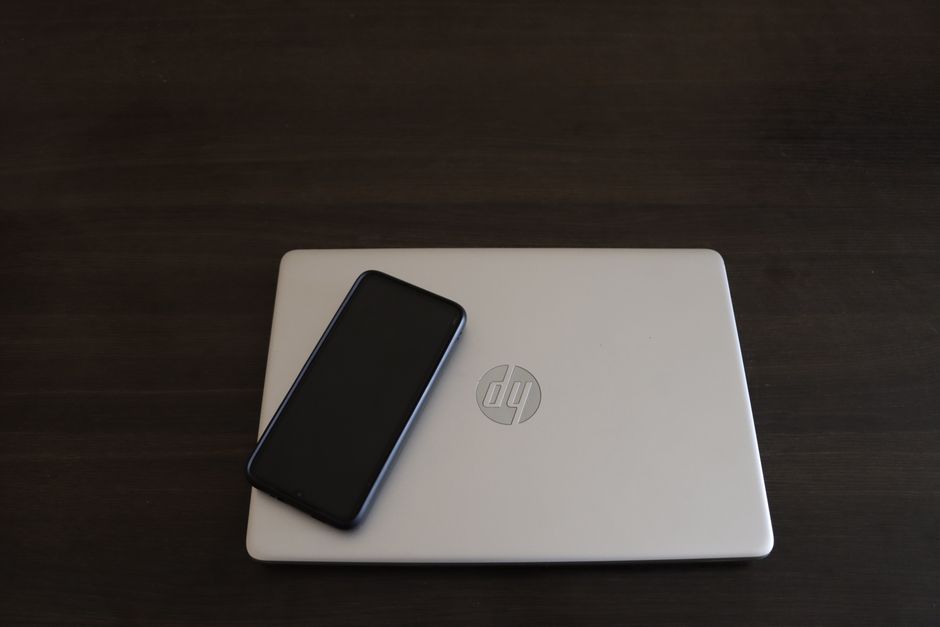
The tech world, particularly in emerging markets like Nigeria, has long been a tale of adaptation and innovation. We’ve seen smartphones transform lives, and cloud services empower businesses. Now, the spotlight shines on 'on-device AI,' a powerful paradigm shift where artificial intelligence processing happens directly on your laptop, phone, or workstation, rather than in distant data centers. HP, a venerable name in hardware, has thrown down the gauntlet with HP IQ, unveiled at its HP Imagine 2026 event in March.
HP IQ is not just another AI assistant; it's an 'intelligence layer' designed to orchestrate your entire work experience. Think of it as the ultimate personal concierge, seamlessly connecting your HP AI PC with other workplace devices and even meeting spaces. This means a new level of productivity and collaboration, where friction points dissolve into fluid workflows. For instance, HP IQ introduces features like 'Ask IQ,' which responds to text and voice queries with intelligent, contextual answers, almost like having a mind-reading assistant. Then there's 'Analyze,' a game-changer for anyone drowning in documents, offering instant summaries and actionable insights from personal files like PDFs and presentations. Imagine effortlessly distilling lengthy reports, freeing up precious hours for strategic thinking or, dare I say, a well-deserved lunch break.
But the true marvel lies in HP IQ's 'Notes & Knowledge' and 'Meeting Agent.' The former keeps a running, searchable record of your interactions, ensuring you never lose a brilliant idea or forget a crucial detail. The latter, the Meeting Agent, takes notes and captures ideas during meetings without you ever needing to leave your current workflow. For the busy professional, this translates to less time spent on administrative tasks and more on engaging creatively, whether in a brainstorming session or simply enjoying the company of colleagues. This local-first approach is revolutionary because it keeps your sensitive data on your device, enhancing privacy and security—a critical concern in our increasingly digital lives.
“HP IQ is actively trying to reclaim user stickiness and own the layer between the OS and the user.” – Industry Analyst. This powerful insight underscores the core disruption: HP IQ isn't merely augmenting Windows or macOS; it's vying to become the primary interface through which we interact with our devices, rendering traditional OS paradigms a step behind. It transforms computers from tools that merely obey instructions into collaborative partners that anticipate needs.
The shift to on-device AI is more than a technological fad; it's a rapidly expanding economic force. The global on-device AI market, valued at an estimated USD 10.90 billion in 2025, is projected to surge to USD 13.17 billion in 2026, exhibiting a robust Compound Annual Growth Rate (CAGR) of 21.66% to reach USD 43.02 billion by 2032. Other projections are even more aggressive, with some seeing the market grow from $10.6 billion in 2025 to $57.7 billion by 2033 at a CAGR of 25.2%.
This growth is fueled by increasing demand for real-time processing, enhanced data privacy, and reduced dependency on cloud services. Hardware is the backbone of this revolution, with dedicated Neural Processing Units (NPUs) becoming standard. HP's EliteBook 6 G2q AI PC, for example, boasts up to 85 TOPS (Trillions of Operations Per Second) NPU AI performance, a clear indicator of the raw power now residing on your desktop. Competitors are not far behind, with Intel's Core Ultra Series 3 'Panther Lake' chips offering up to 180 total platform TOPS when combined with their new NPU 5 architecture, and Qualcomm's Snapdragon X2 Elite/X2 Plus processors also driving high NPU capabilities.
Investment in AI hardware infrastructure is skyrocketing, too. In 2025 alone, companies in this sector raised $4.75 billion in equity funding across 35 rounds, a staggering 71.72% increase over 2024. While much of the mega-round funding for AI startups in early 2026 (like the $110 billion raised by OpenAI) went to software, the underlying hardware platforms are receiving substantial investment to support this on-device shift.
The ripple effects of on-device AI are profound, stretching from global tech giants to individual users in emerging markets like Nigeria. The core impact is a reimagining of productivity. Devices with powerful NPUs and embedded AI, like those running HP IQ, accelerate complex tasks, streamline workflows, and minimize the digital friction that can bog down a workday. Microsoft's own research in 2024 (as of December 2025) found that employees using AI-enabled tools reported a 29% increase in productivity. This isn't just about efficiency; it's about a healthier relationship with work, where technology aids rather than overwhelms.
For global enterprises, the move to on-device AI offers significant advantages in data governance and security. By keeping sensitive information local, companies can better comply with privacy regulations and reduce the risks associated with cloud-based processing. In emerging markets, where internet connectivity can sometimes be a challenge, the ability to perform complex AI tasks offline is a game-changer. Imagine a creative professional in Lagos, editing a video or generating design concepts with AI assistance, all without a stable internet connection. This democratizes access to advanced AI capabilities, fostering innovation and reducing operational costs for startups.
However, HP IQ is not alone in this 'on-device AI battleground.' Competitors like Lenovo are advancing their own localized AI platforms, such as Qira and AI Now. Microsoft's Copilot continues to evolve, aiming for deeper OS integration. This intense competition means more innovation and choice for consumers, but also a fragmentation of the AI experience. The key distinction HP IQ attempts to make is by building an intelligence layer that is deeply embedded across its own hardware ecosystem, seeking to create a unified, seamless experience that transcends individual applications and even the underlying OS.
Visual: Shift from Cloud-centric to Hybrid On-Device AI. By 2026, the optimal strategy for many is a hybrid approach, balancing local processing for speed and privacy with cloud for heavy reasoning.
The emergence of powerful on-device AI solutions like HP IQ signals a fascinating new chapter in computing. However, for this promise to fully materialize, especially in diverse global ecosystems, several areas need careful consideration. Firstly, interoperability is paramount. While HP is making strides with its NearSense technology, collaborating with Google to integrate with Android devices and extend cross-platform capabilities, the industry needs broader standards. Users shouldn't be locked into a single vendor's AI ecosystem. Imagine the frustration if your HP IQ-powered laptop couldn't seamlessly interact with other smart devices in your home or office simply because they're from a different brand.
Secondly, the ethical implications of ever-present, context-aware AI must be addressed proactively. While HP IQ emphasizes on-device data privacy, clear guidelines, user controls, and transparency on how AI learns and makes decisions are crucial. As AI assistants become default OS features, the responsibility for securing these intelligent systems shifts more directly to the user and the hardware choices they make. Education for consumers and IT professionals in markets like Nigeria will be vital to ensure they understand these new layers of control and responsibility.
Finally, the focus needs to remain on augmenting human capabilities rather than simply automating tasks. The beauty of on-device AI, particularly with its potential for deep personalization, lies in its ability to foster creativity and allow individuals to focus on higher-value work. This means developers and manufacturers must design AI experiences that are intuitive, empowering, and truly integrated into our lifestyle, from managing personal health data securely on-device to effortlessly collaborating on cultural projects. The goal is a digital companion that adapts to you, not the other way around – ensuring that as technology advances, humanity thrives.