Intro: The news broke like a supernova across global wires: NASA has selected its crew for Artemis II, the first manned mission to the Moon in over 50 years. Four brave souls, poised to embark on a 10-day lunar flyby, pushing the boundaries of human exploration once again. It’s a spectacular feat, a testament to scientific ingenuity and monumental ambition. But here, on the bustling, often chaotic streets of Lagos, Abuja, or Port Harcourt, as we navigate potholes deep enough to swallow small cars and battle erratic power supply, one cannot help but pause and wonder: what does a mission to the Moon truly mean for the average Nigerian, struggling to make ends meet?
What Is Happening on the Ground
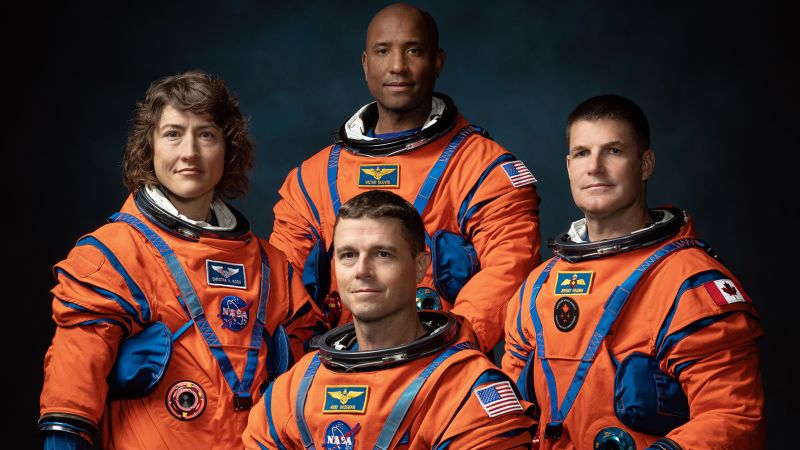
While the world prepares to gaze at the Orion capsule carrying NASA’s Reid Wiseman, Victor Glover, Christina Koch, and the Canadian Space Agency’s Jeremy Hansen towards the Moon in November 2024, our own realities remain stubbornly tethered to Earth. These astronauts, decorated naval aviators and seasoned engineers, will embark on a historic journey, extending humanity's reach beyond anything seen in generations. Meanwhile, millions of our brightest young minds face a different kind of 'space' – the vast, often bleak space of unemployment and underemployment. The official youth unemployment rate for those aged 15-24 stood at 8.4% in Q1 2024, but many experts argue the true figure is far higher, with some reports indicating nearly 80 million young people, or about 53% of the youth population, are currently unemployed, especially when considering the recent changes in data methodology. This disconnect between global spectacle and local struggle is not merely a matter of geography; it speaks volumes about priorities, governance, and the future we are collectively building.
“They are going to the Moon, but we can barely get potable water here. It’s good for science, I guess, but I wish our leaders would focus on our own ‘moonshots’ – stable electricity, good roads, and jobs for our children.” – Mama Ayo, a roadside vendor in Ojuelegba.
The Main Issues
The Artemis II mission, with its estimated launch cost of $4.1 billion for a single flight – part of a larger Artemis program projected to exceed $93 billion by 2025 – represents an extraordinary investment in scientific advancement. While nations like the United States and Canada pour billions into conquering the cosmos, Nigeria's allocations to critical sectors like education and health paint a starkly different picture. In 2024, states in Nigeria spent a paltry average of N6,981 per capita on education and an even more distressing N3,483 on health. To put this in perspective, international bodies like UNESCO and the World Health Organization recommend that nations allocate 15-20% of their annual budgets to these vital sectors. Yet, our federal government's proposed education allocation for 2026 declined to 6.15% from 7.82% in 2025, drifting further from this benchmark. Similarly, the health sector's share in the 2026 proposed budget is only about 4.2%, less than a third of the 15% committed under the Abuja Declaration. Alarmingly, one report indicated that the Ministry of Health only received N36 million out of an N218 billion appropriation for 2025, highlighting severe implementation gaps.
- The Artemis II lunar flyby is budgeted at an estimated $4.1 billion per launch.
- Nigeria's federal education budget share is declining, moving further from the 15% benchmark.
- Only about 4.2% of Nigeria's 2026 proposed budget is allocated to health, far below the 15% Abuja Declaration target.
- Reports indicate a staggering 53% youth unemployment rate in Nigeria, severely impacting human capital development.
The Impact on Daily Life
The disparity in these figures has a profound, tangible impact on the daily lives of Nigerians. When a nation consistently underfunds its foundational sectors, the ripple effects are felt everywhere. Our youth, full of potential, are increasingly trapped in a cycle of joblessness, leading to despair, involvement in illicit activities, or the desperate search for opportunities abroad – the 'japa' syndrome. Good healthcare remains a luxury, pushing many into poverty or premature demise, while our public education system struggles to produce graduates competitive on a global scale. Roads, the arteries of our commerce and connectivity, remain in deplorable states, hindering trade and inflating the cost of goods and services. For example, the ambitious 700-kilometer Lagos-Calabar Coastal Highway project, while vital, is projected to take eight years to complete and cost N7.5 billion per kilometer. Compare this to the rapid deployment and focused execution seen in global space programs, and the contrast is stark:
| Project Aspect | Artemis II Lunar Flyby | Lagos-Calabar Coastal Highway |
|---|---|---|
| Primary Goal | Push human exploration beyond Earth's orbit, lunar flyby. | Enhance connectivity, trade, and economic growth across Nigeria. |
| Estimated Cost (per major unit/phase) | $4.1 billion (for one launch). | N7.5 billion per kilometer (total for 700km: N5.25 trillion, approximately $3.5 billion at N1500/$1). |
| Projected Timeline | ~10-day mission, launching November 2024. | 8 years to complete (by 2031). |
| Funding Source | Government (NASA) & private sector collaboration. | Federal Government with potential PPPs. |
This comparison isn't to say space exploration is inherently bad, but it underscores a critical question of national priorities. While the world's most advanced nations invest in distant futures, ours are consumed by the very basics of today. The Abuja-Kaduna-Zaria-Kano dual carriageway, awarded in 2017, only saw renewed efforts in 2024 and is now set for completion in 2026 after significant delays and cost revisions. This pattern of stalled or protracted projects is a governance reality that stifles progress and erodes public trust.
What Needs to Be Done
For Nigeria to truly thrive and harness the immense potential of its youthful population, a fundamental re-evaluation of our national priorities is urgently required. We need visionary leadership that understands that investing in human capital, infrastructure, and an enabling environment for innovation is our own 'space race.' This means:
- Prioritizing Education and Health: Adhering strictly to international benchmarks for budgetary allocations and ensuring efficient, transparent utilization of funds.
- Youth Empowerment: Implementing robust policies to address unemployment, fostering skills development, and creating platforms for young entrepreneurs and innovators to thrive, preventing brain drain.
- Infrastructure Development with Accountability: Ensuring that critical projects like roads and power plants are completed within stipulated timelines and budgets, with zero tolerance for corruption and inefficiencies. The Benin-Asaba Superhighway, with its 30-month timeline, offers a glimpse of what's possible with focus.
- Promoting Science and Technology Locally: While we may not be building rockets to the Moon tomorrow, we can invest in local research, technology hubs, and scientific education that address our unique challenges and foster homegrown solutions.
As the four astronauts prepare for their monumental journey, let us in Nigeria reflect on our own journey, our own ambitions, and the urgent need to build a nation where every citizen has the opportunity to reach for their own stars, right here on solid ground.