Intro: My fellow Nigerians, it's a harsh truth that our streets often echo with the cries of conflict, our homes with the whispers of hunger, and our hearts with the burden of daily struggles. We live in a nation brimming with potential, yet constantly battling forces that threaten to tear us apart. From the scorching deserts of the North to the bustling markets of the South, the question on every lip is: 'When will peace truly reign, and when will our suffering ease?' It's against this backdrop that news from the Vatican, a continent away, should make us all sit up and pay attention.
What Is Happening on the Ground
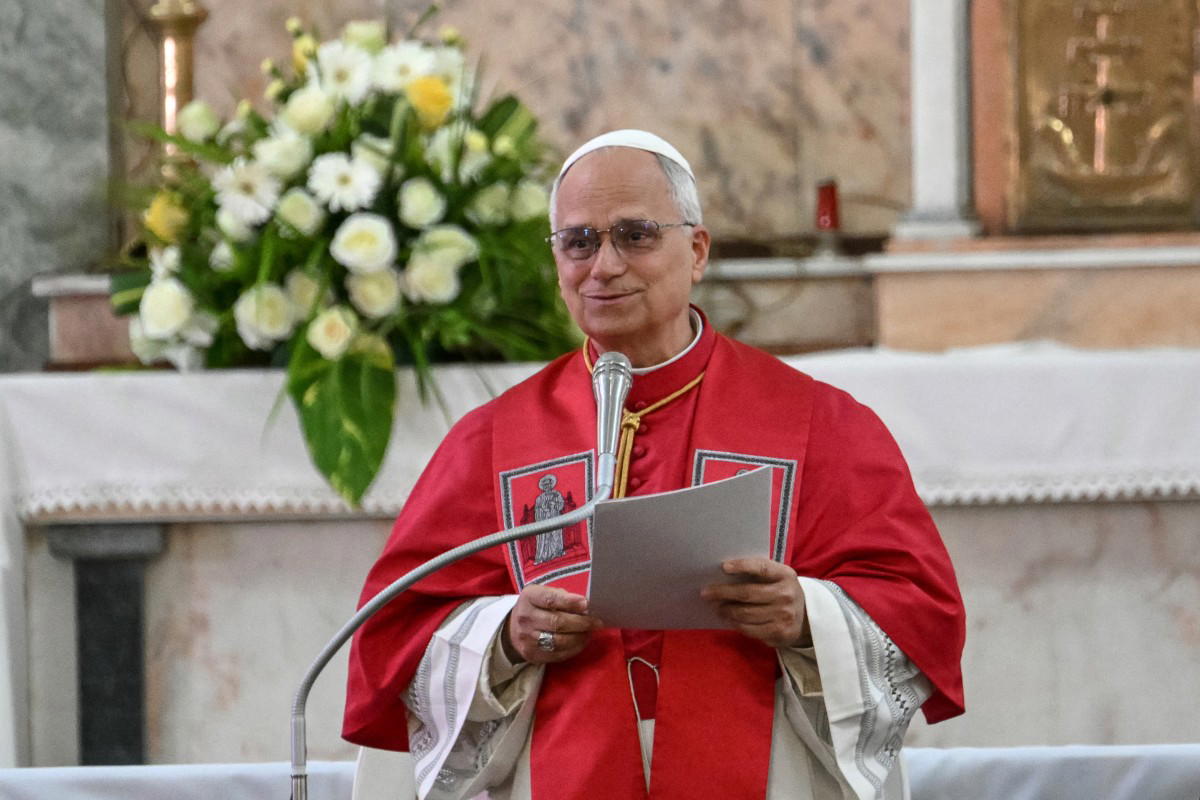
Just yesterday, Pope Leo XIV, the leader of over a billion Catholics worldwide, held a crucial meeting with cardinals – his closest advisors – in Rome. His message was clear, resounding, and stark: 'Resolve conflicts as human beings and not as beasts.' He declared war 'never worthy of humanity' and 'never blessed by God.' This wasn't some abstract sermon; it was a direct challenge to leaders and individuals across the globe. The Pope’s words were delivered during a 'consistory,' a closed-door assembly designed to tackle the biggest global challenges facing the Church. It started with a mass in St. Peter’s Basilica and he had just returned from an 11-day apostolic journey to Africa, speaking in Luanda, Angola, on April 20, 2026. While in Africa, he witnessed firsthand the realities that many of us face daily. He saw the struggles, the hopes, and the silent pleas for peace that rise from our soil, urging Angolans to overcome old divisions, reject corruption, and help young people recover hope. This isn't the first time Pope Leo has called such a gathering since his election in May 2025; it's rapidly becoming his way of getting things done, pushing for a more united leadership within the Church. But more importantly for us, his message travels beyond the walls of the Vatican, straight to the heart of our own persistent issues.
Many elders in our communities would simply nod, saying, 'The white man's spiritual leader understands what we've been saying for generations: you can't build a prosperous home on the ashes of war. Our leaders must heed this wisdom, not just for the cameras, but in their hearts.'
The Main Issues
The Pope’s anti-war stance, though seemingly universal, carries particular weight in a country like Nigeria. We are a nation scarred by decades of internal strife – from the devastating insurgency in the North-East by Boko Haram, displacing millions and shattering livelihoods, to the relentless banditry plaguing the North-West, turning vibrant farmlands into killing fields. And let's not forget the enduring farmer-herder clashes that ignite tension and bloodshed in the Middle Belt, or the rise of secessionist agitations in the South-East that threaten our very unity. These aren't just headlines; they are daily realities that dictate whether a child goes to school, whether a market woman sells her goods, or whether a family sleeps in peace. The Pope’s words about 'high-tech weapons' and using 'intelligence and free will' instead of acting 'as beasts' should echo loudly in the ears of our own policymakers and security chiefs. Are we truly deploying our intelligence to resolve these deep-seated issues, or are we simply escalating conflicts with more force, leading to more suffering? The criticism he faced from US President Donald Trump over his anti-war message further highlights the complex political landscape where powerful nations often prioritize strategic interests over the human cost of conflict. Trump has even called the Pope 'WEAK on Crime, and terrible for Foreign Policy'. For Nigeria, this means navigating international relations while trying to secure internal peace, a delicate balancing act that often leaves the common man caught in the crossfire. Our governance realities are tied to these issues; instability scares off investors, drains national resources, and diverts attention from critical development projects like roads, schools, and hospitals. Pope Leo XIV specifically warned of a 'violent culture of power' where the common good is relegated to the background, and the 'concrete tragedy of people at war is reduced to a secondary consideration in relation to strategic interests'. This sentiment resonates deeply when we consider how often the welfare of ordinary Nigerians seems to take a backseat amidst political maneuvering and power struggles.
- Pope Leo XIV convened his second gathering of cardinals (a 'consistory') on June 26, 2026, in the Vatican.
- His key message was a strong anti-war stance, urging resolution of conflicts 'as human beings and not as beasts.'
- The Pope's anti-war message has been 'harshly criticised by US President Donald Trump.'
- Pope Leo XIV was elected in May 2025 and views these consistories as a crucial tool for 'collegial leadership.'
- He recently concluded an 11-day apostolic journey to Africa, including a stop in Luanda, Angola, on April 20, 2026.
The Impact on Daily Life
Let's be brutally honest: when war or conflict rages, it’s the ordinary Nigerian who pays the highest price. Our markets dwindle, roads become unsafe for traders, and the cost of essential goods skyrockets. Imagine waking up to news of another attack, knowing that your children's school might be shut, or that the path to your farm is now a death trap. This isn't just about fear; it's about survival. Youth, especially, bear the brunt. With education disrupted and job opportunities scarce, many young people are left vulnerable. Some are recruited into armed groups, seeing it as the only path to a semblance of power or income, while others embark on perilous journeys across the Sahara and the Mediterranean, seeking peace and prosperity abroad, often ending in tragedy. The Pope’s call for peace is, in essence, a call for a lifeline for our youth. Consider the stark contrast in what we face now compared to a relatively calmer period. Below is a simple comparison of how basic market costs have soared, partly due to persistent insecurity disrupting supply chains and global instability affecting fuel prices, which in turn drives up transport costs for everything else:
Before Major Escalations (approx. 2023)
- Petrol (1 litre): NGN 200 - NGN 250
- Bag of Rice (50kg): NGN 30,000 - NGN 40,000
- Yam (medium tuber): NGN 1,500 - NGN 2,000
- Transportation (local fare): NGN 100 - NGN 200
Current Market Realities (approx. 2026)
- Petrol (1 litre): NGN 600 - NGN 800+
- Bag of Rice (50kg): NGN 80,000 - NGN 100,000+
- Yam (medium tuber): NGN 3,000 - NGN 5,000
- Transportation (local fare): NGN 300 - NGN 500+
These figures aren't just numbers; they represent the increasing burden on every household, the empty plates on tables, and the dreams deferred. The link between peace and economic stability cannot be overstated. When we fight, we hurt our pockets, our businesses, and our future.
What Needs to Be Done
So, what does Pope Leo XIV's anti-war message mean for us, the everyday Nigerians? It's a powerful reminder that peace is not just the absence of war, but the presence of justice, equity, and good governance. Our leaders, at all levels, must move beyond empty rhetoric and implement tangible strategies to address the root causes of conflict: poverty, unemployment, illiteracy, and a lack of trust in institutions. Firstly, dialogue must replace discord. Local and national peace initiatives need to be strengthened, involving all stakeholders – community leaders, religious figures, youth groups, and government representatives. The ‘intelligence and free will’ the Pope spoke of must be channelled into finding common ground, fostering understanding, and building bridges, not walls. Secondly, there's a desperate need for economic empowerment, especially for our youth. Investment in education, vocational training, and small businesses can provide alternatives to crime and violence, offering a path to dignified survival. A hungry man is an angry man, and an idle hand is often the devil’s workshop, as our elders say. Thirdly, our security agencies must be reformed to be more effective, professional, and accountable to the people they serve. Protection of lives and property must be their paramount duty, executed with respect for human rights. Finally, as citizens, we also have a role to play. We must resist the urge to spread hate and division, to fuel ethnic or religious tensions. We must hold our leaders accountable and demand peace, not just as a fleeting wish, but as a fundamental right. The Pope’s message is a universal call to humanity, and for us in Nigeria, it's a stark mirror reflecting our own struggles and the urgent need for a collective shift towards genuine peace and progress. Let's remember the words of Cardinal Jean-Paul Vesco, Archbishop of Algiers, who noted that these gatherings help leaders 'form a college, to get to know one another… The more we have these meetings, the more united we will be'. If religious leaders can strive for unity, so too must our political and community leaders, for the sake of our dear nation.