Intro: Imagine a city where the government, responding to 'constant public demand,' decides to invest public funds in building a cemetery specifically for pets. Sounds like a scene from a Hollywood movie, right? Well, that's exactly what's happening in Barcelona, Spain. They're setting up the country's first public pet cemetery, a testament to how deeply people there cherish their animal companions. But as a Nigerian, reading this news, a crucial question burns in my mind: What does this say about our own priorities, our daily struggles, and the very fabric of our society?
What Is Happening on the Ground
The Catalonian capital, Barcelona, a city with 180,000 dogs and where half of its families own a pet, is making headlines with its groundbreaking initiative. Starting next year, this densely populated city will offer both burials and cremations for pets, with an estimated 7,000 services expected annually. This move, spearheaded by Barcelona's Councilor for Climate Emergency and Ecological Transition, Eloi Badia, wasn't just a whim. It was a direct response to a clear, consistent public yearning for a dignified resting place for their beloved animals.
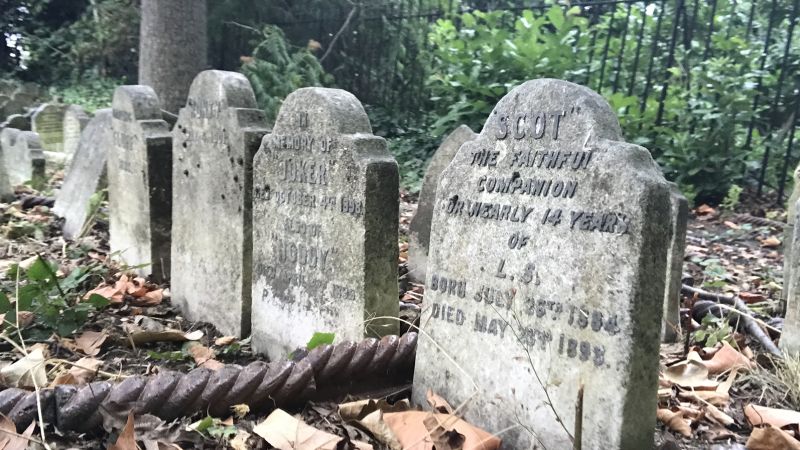
For many across Europe and the Americas, the idea of a public pet cemetery isn't new. London’s Hyde Park saw its first one in 1881, New York’s Hartsdale in 1896, and Paris’s ornate Cimetière des Chiens followed in 1899. These historical facts highlight a long-standing cultural evolution where pets transitioned from mere animals to cherished family members. Research from historical archaeology, like that of Eric Tourigny at Newcastle University, further confirms this shift, showing how people even centuries ago went to great lengths – like burying a beloved dog in their backyard with evident care – to mourn their animal companions.
Now, let’s pivot back home. In Nigeria, the reality couldn't be starker. While we undoubtedly love our pets – from the guard dog that barks away intruders to the cat that keeps rodents at bay, and even the exotic birds some of our youth keep – the concept of a 'public pet cemetery' feels like a distant fantasy, almost an insult, in the face of our daily struggles. How do everyday Nigerians handle the passing of their beloved animals? Often, it’s a quiet affair, a burial in a dusty corner of the compound, a disposal in the bush, or, sadly, sometimes even with household waste. The choice isn't about dignity; it's about necessity and the stark absence of any formal, affordable options.
“How can we even begin to talk about burying pets with dignity when many of our people are struggling to bury their own kin with honour, or when access to basic healthcare for humans remains a pipe dream for millions?” — A concerned Lagos resident.
The Main Issues
The news from Barcelona, while heartwarming for pet lovers there, serves as a powerful mirror reflecting our own governance realities and societal priorities. The 'constant public demand' that spurred Barcelona’s council into action makes one wonder: What about the 'constant public demand' in Nigeria for reliable electricity, potable water, functioning roads, accessible healthcare, and quality education? These are not luxuries; they are fundamental rights that remain elusive for too many citizens.
The establishment of a public pet cemetery signifies a government confident enough in its foundational public services to then address more nuanced aspects of its citizens' well-being and emotional needs. It speaks to a level of development and resource allocation that, for now, feels entirely out of reach for us. Our daily struggles are not about where to bury a cherished dog, but about surviving the next day, navigating crumbling infrastructure, and fighting for basic amenities. This isn't to say our bond with animals is less, but our hierarchy of needs, driven by persistent governance failures, is fundamentally different. It highlights a painful gap in development where advanced societies worry about pet remains, while we wrestle with managing human waste and providing safe drinking water.
- Barcelona's new public pet cemetery is the first of its kind in Spain, responding to 'constant public demand.'
- Historical archaeology shows people have cared deeply for pets for centuries, even burying them with care.
- In Nigeria, formal pet burial options are virtually non-existent, leaving owners to manage pet remains informally.
- The discourse around public pet welfare often clashes with pressing human development needs in developing nations.
Comparing Public Priorities: A Tale of Two Cities (Illustrative)
| Area of Concern | Barcelona City Council's Focus | Typical Nigerian State/LGA Focus (Often a struggle) |
|---|---|---|
| Public Pet Welfare (e.g., Cemeteries) | High Priority: Investing public funds for dignity in pet passing. | Extremely Low Priority: No formal public provision. |
| Basic Human Infrastructure (Roads, Water, Power) | Well-Established: Consistent maintenance and expansion. | Major Challenge: Significant deficits, erratic provision, constant public outcry. |
| Public Healthcare & Education | Robust & Accessible: Comprehensive services for all citizens. | Severely Underfunded: Often dilapidated facilities, brain drain, high out-of-pocket costs. |
| Sanitation & Waste Management | Highly Efficient: Modern systems for environmental health. | Persistent Crisis: Indiscriminate waste disposal, environmental pollution, health risks. |
The Impact on Daily Life
For young Nigerians, especially those in urban centers, pet ownership is a growing trend. Some see it as a status symbol, others as genuine companionship in often lonely or stressful urban environments. The rising popularity of dog breeding and pet stores, particularly in cities like Lagos and Abuja, shows a segment of the population that genuinely values their animals. Yet, when a beloved pet falls ill or passes away, the lack of infrastructure for dignified disposal or even affordable veterinary care becomes a personal crisis. The emotional toll of losing a companion is compounded by the practical dilemma of what to do with the body, often leading to unhygienic or undignified solutions borne out of necessity, not lack of love.
This situation also creates a burden on the environment and public health. Unregulated disposal of animal carcasses contributes to sanitation problems, especially in our already struggling waste management systems. It's a silent aspect of our daily lives that, while not as outwardly dramatic as a collapsed bridge or a power outage, slowly chips away at public hygiene and reinforces a sense of disregard for our environment and, by extension, ourselves.
What Needs to Be Done
While the immediate response to hearing about Barcelona's pet cemetery might be scorn or laughter in some Nigerian quarters, it actually offers a crucial lesson: responsive governance. Our focus, for now, must remain squarely on getting the basics right. We need governments at all levels – local, state, and federal – to listen to the 'constant public demand' for electricity, water, roads, security, and quality healthcare. When these foundational issues are addressed with transparency and accountability, only then can we truly begin to expand our considerations to other aspects of societal well-being, including animal welfare.
However, this doesn't mean we completely ignore our animal companions. Community-led initiatives for animal welfare, supported by local governments and NGOs, can start to bridge the gap. Encouraging responsible pet ownership, promoting affordable veterinary services, and perhaps even creating designated, hygienic communal burial grounds in the future, are steps that can be taken within our current economic realities. The story of pet cemeteries is ultimately a story about being human, about compassion, and about how a society values all life within its care. Nigeria has a long way to go, but by prioritizing human dignity and responsive governance, we can eventually build a society where both people and their cherished animals can live and rest with respect.