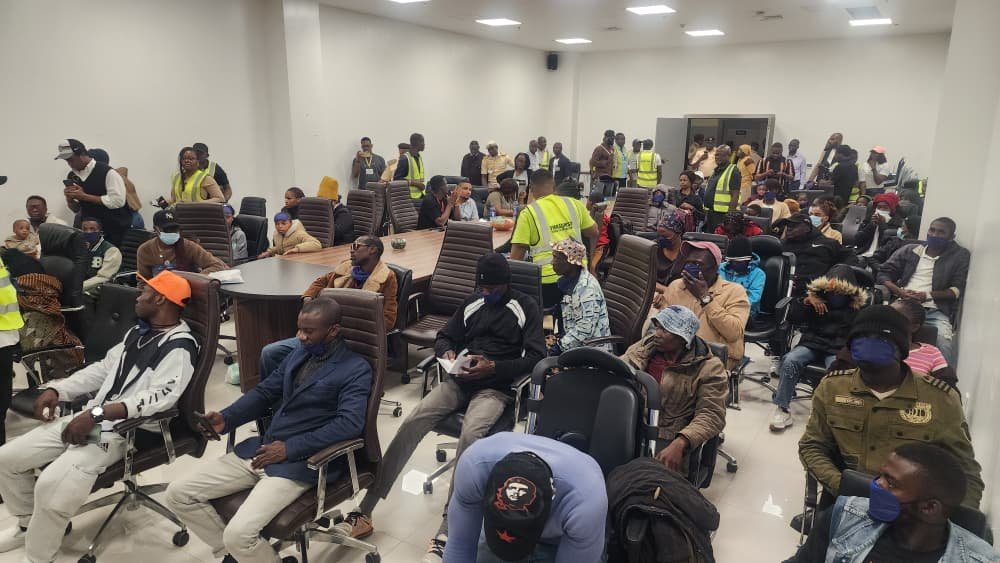
Intro: It's a tale too familiar, isn't it? Nigerians, our brothers and sisters, once again finding themselves caught in a storm of hatred and violence in a foreign land they once called a second home. The dream of a better life, often chased with hope and sacrifice, turns into a nightmare, forcing them to flee back to the very shores they departed from. Just this past Wednesday, 66 more of our compatriots landed at the Murtala Muhammed International Airport in Lagos, their faces a mix of relief, exhaustion, and perhaps, a touch of lingering fear. They are the second batch, a stark reminder of the xenophobic attacks that continue to plague South Africa, forcing our government to step in, yet again, to bring our people home.
What Is Happening on the Ground
The news broke just yesterday, Thursday, June 25, 2026, confirming what many of us had anticipated with heavy hearts. Another 66 Nigerians have been successfully repatriated from South Africa. This isn't just a number; it's 66 lives, 66 stories, 66 families impacted by the recent wave of xenophobic violence that has once again flared up in the Rainbow Nation. They arrived at approximately 8:50 p.m. on Wednesday, their return flight touching down under the cover of night, perhaps mirroring the darkness of the experiences they endured.
This latest evacuation is a direct response to President Bola Ahmed Tinubu's approval, following persistent reports of renewed attacks on foreign nationals, particularly Nigerians. It follows closely on the heels of the first batch, a larger group of 258 Nigerians who arrived back home on June 11, aboard a chartered Air Peace flight. Think about that for a moment – nearly 324 Nigerians forced to abandon their lives, their livelihoods, and their aspirations, all because of senseless hatred. It speaks volumes about the precarious situation many of our citizens face while trying to make an honest living outside our borders.
Mr. Kimiebi Ebienfa, the spokesperson for the Ministry of Foreign Affairs, confirmed this development to SStore Editorial, stating clearly that 66 persons were repatriated in this second phase of the exercise. On the ground, ensuring a smooth return for our brothers and sisters was the Lagos Office head of the Nigerians in Diaspora Commission (NiDCOM), Mr. Dipo Onabowale. He acknowledged the pivotal role played by Mr. Kunle Soname, the Chairman and CEO of ValueJet, who facilitated the evacuation flight. Officials from the Nigerian High Commission in South Africa were also on hand, accompanying the returnees all the way home, a gesture that, while appreciated, cannot erase the trauma.
“We commend President Tinubu for approving this evacuation exercise. It shows that our government cares for its citizens, no matter where they are.” - Mr. Dipo Onabowale, NiDCOM Lagos Office Head.
The Main Issues
The recurring cycle of xenophobic attacks in South Africa against foreign nationals, especially Nigerians, is a deep wound in the heart of African brotherhood. It's not just about isolated incidents anymore; it's a systemic issue rooted in a complex mix of economic frustrations, social tensions, and political scapegoating. When jobs are scarce and resources are stretched thin, some South Africans unfortunately turn their anger towards 'outsiders,' blaming them for their own socio-economic woes, instead of addressing deeper governmental or societal failures.
This tension undermines the very essence of African unity and solidarity, especially given Nigeria's significant role in helping South Africa overcome apartheid. It's a bitter irony that those who stood with them in their darkest hour are now being targeted. This isn't just a South African problem; it's an African problem, reflecting a failure to build cohesive, inclusive societies that value diversity and human dignity. For many Nigerians, leaving home is a last resort, a desperate attempt to find opportunities that are often elusive within our own borders. They are not seeking to steal jobs; they are seeking to survive, to provide for their families, just like anyone else. When those hopes are shattered by violence, it's a blow not just to individuals but to the collective African spirit.
- The federal government, through NIDCOM and the Ministry of Foreign Affairs, has facilitated the repatriation of 324 Nigerians in two batches since June 11, 2026.
- The evacuations were approved by President Bola Ahmed Tinubu following renewed xenophobic attacks in South Africa.
- Financial aid and support packages, including cash and data, have been provided to the returnees by various organizations and individuals.
- Challenges from the first phase of the evacuation are reportedly being addressed by the Ministry of Foreign Affairs.
The Impact on Daily Life
For these returnees, the journey back home is far from the end of their struggle; it’s merely the beginning of another. Imagine leaving everything you’ve built, however small, behind – a small business, a job, friends, a community – and arriving back in Nigeria with little more than the clothes on your back and the painful memories of what you endured. The psychological toll alone is immense. Many will carry scars, visible and invisible, from the trauma of living in fear, of seeing their fellow Africans attacked, and of being forced to abandon their dreams.
Economically, the impact is devastating. These individuals often supported families back home, sending remittances that served as a lifeline for many. Now, they are the ones who need support. The government, along with private individuals and organizations, has stepped up to offer some assistance. NiDCOM announced support packages, which include a generous N1 million each for indigenes of Imo State among the evacuees, courtesy of Governor Hope Uzodimma. MTN Nigeria provided free SIM cards and N50,000 worth of data, a small but crucial connection to the world. In addition, N100,000 was credited directly into the bank account of each returnee, with Pastor Bolaji Idowu, founder of Harvesters International Christian Centre, also donating an additional N100,000 to each person.
While these gestures are commendable and certainly offer a glimmer of hope, they often fall short of addressing the long-term needs of reintegration. A lump sum, while helpful for immediate survival, rarely replaces years of lost income or the capital needed to restart a significant venture. Our streets are already teeming with unemployed youth and struggling families. Adding hundreds of returnees, many without a clear path forward, adds another layer of complexity to our nation’s already challenging economic landscape.
Here’s a quick look at the support versus the reality:
| Item | Amount Received (General) | Estimated Cost (Monthly/Start-up) |
|---|---|---|
| Initial Cash Aid (NiDCOM/Pastor Idowu) | N200,000 | N/A |
| Data/Airtime (MTN) | N50,000 | N/A |
| Total General Support | N250,000 | |
| Additional for Imo Indigenes | N1,000,000 | |
| One-month Rent (Self-contained, moderate) | N150,000 - N250,000 | |
| Basic Food for a Family of 4 (Monthly) | N80,000 - N120,000 | |
| Start-up Capital for a Petty Trade | N200,000 - N500,000+ |
As you can see, for many, the support is a lifeline but not a long-term solution. It highlights the urgent need for comprehensive reintegration strategies that go beyond immediate cash handouts. These Nigerians need sustainable opportunities, skills training, and psychological support to truly rebuild their lives after such a harrowing experience.
What Needs to Be Done
This recurring nightmare calls for more than just reactive evacuations. While we appreciate President Tinubu's swift approval and the efforts of agencies like NIDCOM and the Ministry of Foreign Affairs, including Minister Bianca Odumegwu-Ojukwu's assurance that all registered Nigerians willing to return will be evacuated, we need a robust, long-term strategy. First, diplomatic pressure on the South African government must be intensified. Nigeria, as a regional powerhouse, cannot afford to have its citizens continually targeted without significant diplomatic repercussions. We need clear, measurable commitments from South Africa to protect foreign nationals and prosecute those responsible for xenophobic violence. This isn't just about stern words; it's about holding them accountable.
Secondly, our government must redouble efforts to create a conducive environment at home. Many of those who migrate do so out of necessity, seeking greener pastures because Nigeria's pasture is often too dry. Investing in job creation, strengthening our economy, improving security, and fostering a sense of hope, especially among our vibrant youth, will reduce the push factors that drive our people abroad into uncertain and often dangerous situations. If our youth can thrive here, the allure of foreign lands, especially those fraught with peril, will diminish.
Thirdly, for the returnees, a well-structured reintegration program is crucial. This goes beyond immediate financial aid. We need vocational training programs, access to credit facilities for small businesses, psychosocial support for trauma victims, and active community engagement to help them resettle. Agencies like NEMA and the National Commission for Refugees, Migrants and Internally Displaced Persons were at the airport to receive and document them, which is a good start, but continuous support is what truly matters.
Finally, we as Nigerians must also reflect on our own attitudes towards returnees and internal migration. Charity, as they say, begins at home. We must welcome our brothers and sisters back, help them find their footing, and ensure that their return, however painful its cause, becomes a new chapter of opportunity and healing. This is a moment for us to stand together, not just as a government or a few benevolent individuals, but as a nation united in compassion and purpose.