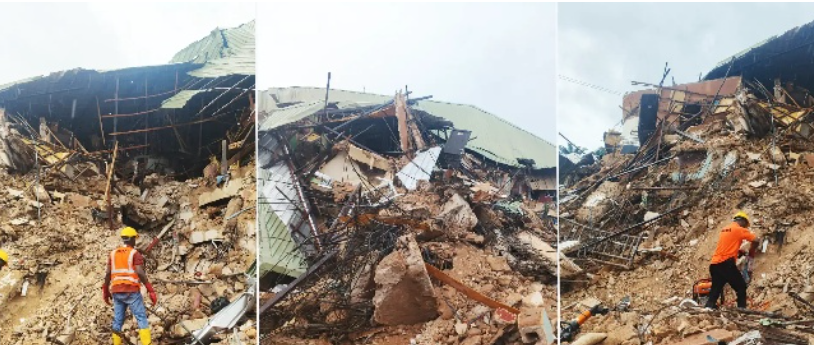
The month of March 2026 has cast a sombre shadow over Maiduguri, the Borno State capital, as a series of coordinated bomb blasts ripped through the city, shattering a period of relative calm and plunging residents once again into fear and uncertainty. These devastating attacks, occurring on the evening of Monday, March 16, 2026, underscore the persistent and evolving threat of insurgency in Nigeria's North-East region. The federal government, through the swift visit of Vice President Kashim Shettima, has moved to reassure the populace, demonstrating a renewed resolve to confront terrorism head-on amidst a complex humanitarian and security landscape.
The explosions, suspected to be suicide bombings, struck three high-profile, bustling locations simultaneously: the entrance of the University of Maiduguri Teaching Hospital, the Post Office market, and the popular Monday Market. The timing, around 7:24 p.m. West African Time, was particularly tragic, coinciding with a busy period when traders were closing their stalls and residents were returning home after breaking their Ramadan fast. This strategic targeting of civilian hubs highlights a dangerous tactical shift by the insurgents, aiming to inflict maximum casualties and sow widespread panic. Initial reports indicated at least 23 fatalities and 108 injuries. However, the Zonal Coordinator of the National Emergency Management Agency (NEMA) later updated these figures to at least 27 people killed and 146 others injured, with eyewitnesses reporting over 200 wounded receiving care in hospitals. The human cost is immeasurable, leaving families shattered and communities grappling with profound loss and trauma.
These attacks mark a troubling resurgence of high-impact violence in Maiduguri, a city that had enjoyed a period of relative peace since 2021, save for a mosque bombing in December 2025 that killed five people and injured 35 others. Security analysts, including Dr. Ladd Serwat of ACLED, have described the March 16 incident as the deadliest suicide attack in Nigeria since June 2019, confirming a dangerous tactical shift and an enhanced operational capacity of the suspected Aliyu Ngulde-led faction of Jama'atu Ahl al-Sunnah lid-Da'wati wal-Jihad (JAS), a Boko Haram splinter group. This coordinated multi-pronged assault demonstrates improved planning and logistics, creating a profoundly elevated threat environment for civilians and humanitarian actors alike.
Federal Government's Swift Response and VP Shettima's Visit
In the immediate aftermath of the blasts, reactions from both state and federal levels were swift. Borno State Governor, Babagana Umara Zulum, strongly condemned the barbaric acts and called for calm. From the United Kingdom, where he was on a state visit, President Bola Tinubu directed security chiefs to immediately relocate to Maiduguri to take charge of the situation, locate the perpetrators, confront them, and ensure their defeat. He also instructed emergency agencies to provide urgent care for the injured.
Demonstrating the federal government's commitment, Vice President Kashim Shettima arrived in Maiduguri on Wednesday, March 18, 2026, for an on-the-spot assessment and a condolence visit to the victims. Representing President Tinubu, he was received by top government officials, including Borno State Deputy Governor Umar Usman Kadafur. During his visit, Vice President Shettima met with victims receiving treatment at the University of Maiduguri Teaching Hospital, offering words of comfort and reassurance to affected families. He reaffirmed the Federal Government's unwavering determination to confront and defeat terrorism, stating that beyond presidential directives, additional investments are being made in military equipment and logistics to strengthen ongoing operations. The Vice President also assured victims of continued government support, with the National Emergency Management Agency (NEMA) and the North East Development Commission (NEDC) mobilised to provide relief and assistance in collaboration with the Borno State Government.
Security Landscape, Counter-Terrorism Efforts, and Challenges
The Maiduguri bombings did not occur in isolation. Just days prior, on March 12, 2026, the Borno State government had announced new security measures in response to growing concerns over insurgent activities in other parts of the state. Furthermore, barely two days after the Maiduguri blasts, Nigerian soldiers, backed by air support, repelled an attack by suspected Boko Haram/ISWAP militants on a military base in Mallam Fatori, Borno State, killing over 60 fighters on March 18, 2026. This continuous cycle of violence underscores the formidable security challenges facing Nigeria's North-East.
Critics like Abuja-based engineer and public affairs commentator, Obi Njoku, have expressed concern, highlighting that the resurgence of attacks in Maiduguri, once considered one of the most secure locations, exposes potential security failures. Njoku argued that the government's response has often been reactive, stressing the need for proactive intelligence and preventive strategies to avert such tragedies. The Inspector-General of Police, Olatunji Disu, who also visited the bombing sites and victims, assured residents of significantly tightened security, with enhanced police deployments, increased surveillance, and robust joint operational measures. These efforts are crucial, but sustained, long-term strategies remain paramount to truly restore lasting peace and security.
Data Analysis: Funding Security vs. Humanitarian Needs
Nigeria's commitment to tackling insecurity is evident in its budgetary allocations. For the 2026 fiscal year, a significant sum of ₦5.41 trillion has been proposed for the national security and defence architecture. This represents a substantial investment, with the Ministry of Defence alone slated to receive approximately ₦3.154 trillion. Using the targeted exchange rate of ₦1,400 per $1, this translates to roughly $3.9 billion for defence and security for 2026. This allocation is part of the total projected ₦58.47 trillion 2026 Appropriation Bill.
However, the humanitarian crisis in the North-East continues to escalate. In January 2026, the Government of Nigeria and humanitarian partners launched an urgent appeal for US$516 million to deliver lifesaving aid to 2.5 million people across Borno, Adamawa, and Yobe (BAY) states. Shockingly, women and children constitute 80 percent of those most in need. Projections for 2026 indicate that nearly 3 million children under five are expected to suffer from severe acute malnutrition in Nigeria, with one-third of them residing in the BAY states. Furthermore, approximately 5.8 million people in the North-East alone are anticipated to face acute food insecurity during the 2026 lean season. This comes at a time when funding for the 2025 Humanitarian Needs and Response Plan (HNRP), which amounted to $282 million, was already half of what was received in 2024, leading to a dramatic decline in humanitarian assistance.
Humanitarian Funding Per Person in Need: 2025 vs. 2026 (BAY States)
The stark reality of diminishing humanitarian aid against rising needs is a critical concern. Let's look at the per-person funding:
- 2025 Humanitarian Appeal: $910 million for 3.6 million people (initially targeted). However, only $282 million was received.
- 2026 Humanitarian Appeal: $516 million for 2.5 million people (prioritised focus on severe to extreme needs).
Estimated Aid Received Per Person in 2025: $282,000,000 / 3,600,000 ≈ $78.33 per person.
Potential Aid Per Person if 2026 Appeal is Met: $516,000,000 / 2,500,000 = $206.40 per person.
While the 2026 target for aid per person is higher (reflecting a more focused approach on severe cases and perhaps greater cost efficiency as noted by OCHA at approximately $206 per person reached, down from $253 in 2025), the actual amount received in 2025 fell significantly short of the appeal. The critical question remains whether the 2026 appeal will be fully met to address the dire circumstances of 2.5 million vulnerable Nigerians.
The economic impact of the insurgency on Maiduguri and the wider Borno State has been profound. For years, the conflict has led to economic stagnation, increased unemployment, low-income levels, and poor living conditions for the majority of the populace. Market linkages with neighbouring towns and countries have been severed, businesses have closed down, and the overall socio-economic fabric has been severely damaged. Resources that could have been invested in development, education, and health have been diverted to crime control and prevention.
Figure 1: Comparison of Nigeria's 2026 Security Budget and Humanitarian Crisis Metrics
(Note: Defence & Security in Trillions of Naira, Humanitarian Aid in Millions of US Dollars, People/Children in Millions)
The current situation in Maiduguri and the broader North-East demands a multi-dimensional approach that integrates robust security interventions with critical economic recovery programmes, agricultural revitalisation, and social resilience initiatives. The Vice President’s visit, while a symbol of federal solidarity, must be followed by tangible, sustained efforts to not only neutralise the threats posed by insurgents but also to address the root causes of vulnerability, including poverty, unemployment, and lack of access to basic services. As Nigeria navigates these complex challenges, the focus must remain on protecting its citizens, rebuilding shattered lives, and fostering an environment where peace and prosperity can genuinely take root.
The resilience of the Nigerian spirit, particularly in Borno, remains unbroken. However, the government's actions in the coming months will be critical in shaping the future of the region. This is a call to action for all stakeholders – government, security forces, humanitarian agencies, and the local communities – to work in concert, ensuring that the sacrifices of Maiduguri's citizens are not in vain and that a lasting peace is finally achieved.