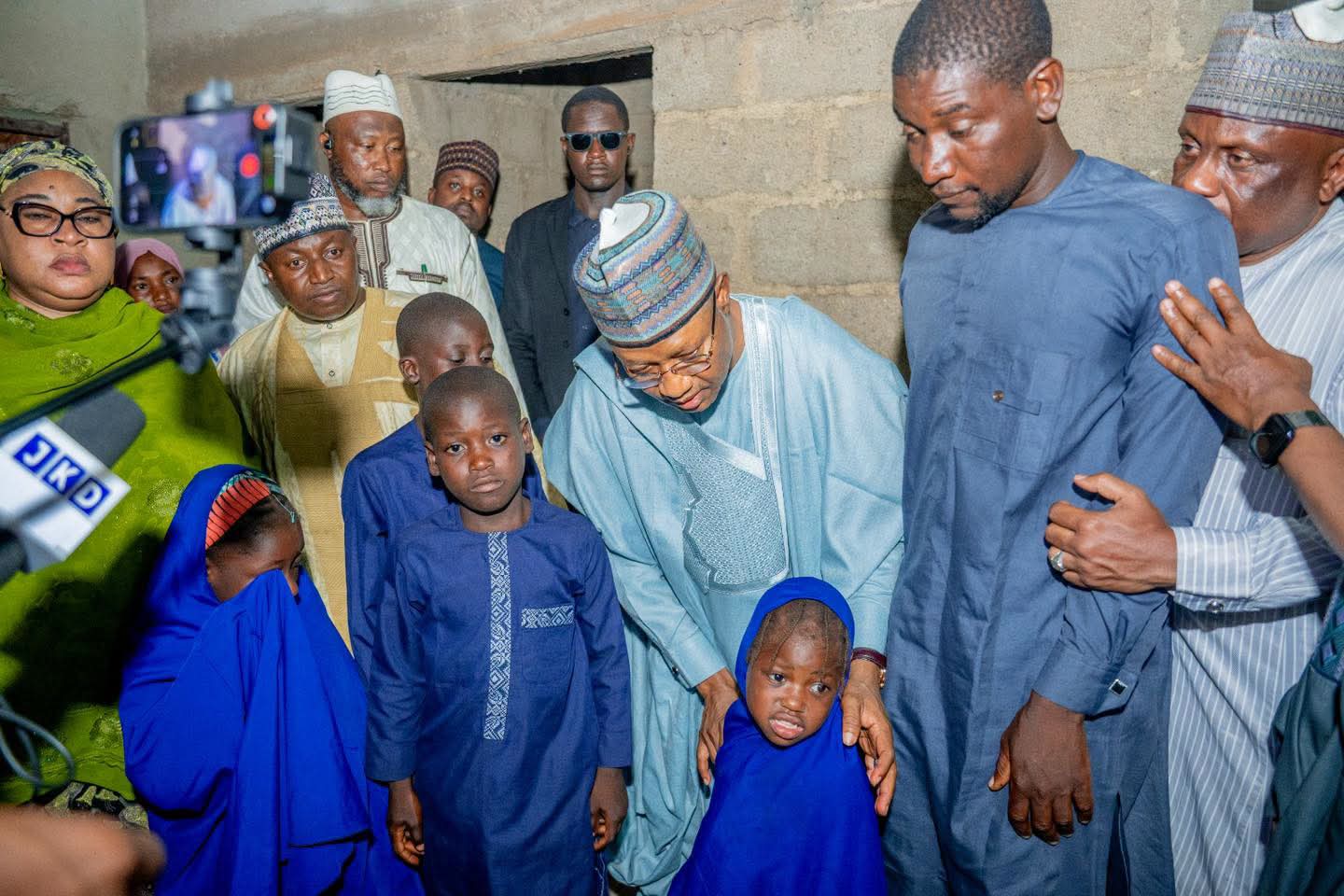
Intro: In a nation often rocked by headlines of insecurity, the story of Ummulkhairi Usman Aliyu, tragically slain in Maraban Jos, Kaduna, resonates deeply. It's not just another news item; it's a stark reminder of the fragile thread upon which the daily lives of countless Nigerians hang. For families living paycheck to paycheck, in communities constantly on edge, a single act of violence can unravel everything – dreams, safety, and the very fabric of hope. The loss of Ummulkhairi isn't just a private tragedy for her family; it's a profound wound for the entire community, laying bare the urgent need for a justice system that doesn't just promise action, but delivers it swiftly and transparently.
What Is Happening on the Ground
Kaduna State Governor, Senator Uba Sani, recently paid a solemn condolence visit to the heartbroken family of Ummulkhairi Usman Aliyu in Maraban Jos. The air was thick with grief as Governor Sani met with Ummulkhairi's husband, Malam Aliyu, and other family members, offering his deepest sympathies and prayers for the departed soul. More than just words, the Governor made a profound commitment: everyone involved in Ummulkhairi's killing would be brought to justice. This assurance comes at a time of sustained public concern over the circumstances surrounding her death, with communities across Kaduna demanding accountability and an end to the pervasive violence that has gripped parts of the state. Governor Sani reaffirmed his administration's dedication to ensuring justice, stressing that security agencies are actively pursuing every possible lead to apprehend all those involved. He openly declared, "I want to assure the family that those responsible for this heinous act will be identified, arrested and prosecuted. No one connected with this tragic incident will escape the full weight of the law." Such pronouncements offer a glimmer of hope, yet for many, the true measure of governance lies not just in promises, but in visible, concrete actions that restore faith in the system.
"Every time we hear of another life lost, it feels like a part of us dies too. We need to see justice, not just arrests. Our children deserve to grow up in a Nigeria where their lives matter, and those who take them are held truly accountable." - A market woman, Maraban Jos.
The Main Issues
The tragedy of Ummulkhairi’s death, despite the Governor’s swift response, highlights several critical and deeply entrenched issues plaguing our society. Firstly, there’s the pervasive problem of insecurity itself. Kaduna, like many states in Nigeria, has grappled with various forms of violence, from banditry to communal clashes. The ease with which lives can be cut short, and the subsequent public outcry, underscore a worrying erosion of the sanctity of life. This isn't just about crime statistics; it's about the psychological toll on citizens who live in perpetual fear, constantly looking over their shoulders. Secondly, the slow wheels of justice remain a significant hurdle. While Governor Sani disclosed that 41 suspects have already been arraigned for culpable homicide and another 30 for unlawful assembly, with 41 others still under investigation, the journey from arrest to conviction in Nigeria is often long and fraught with challenges. The public's trust in the justice system is often tested by delays, perceived corruption, and a lack of transparency, leading to cynicism and a feeling that justice is only for the privileged. Furthermore, the Governor's mention of potential police involvement and the promise of legal sanctions against any officer found culpable points to the critical issue of institutional accountability. When those entrusted with maintaining law and order are themselves implicated, it strikes a devastating blow to public confidence and hinders effective crime fighting. The need for comprehensive police reform, better training, and stricter oversight cannot be overstated. Finally, the government's promise to take full responsibility for the education and welfare of Ummulkhairi’s children is a commendable step, moving beyond mere sympathy to concrete action. However, it also raises questions about the broader social safety nets for countless other families who suffer similar fates but lack the direct intervention of the state governor. While noble, such individual interventions, however well-intentioned, cannot replace robust, systemic support for all victims of violence and injustice across the nation. This situation forces us to confront the governance realities: are we building systems that protect all citizens, or are we reliant on the compassion of individual leaders?

- Governor Uba Sani visited the family of Ummulkhairi Usman Aliyu to offer condolences and promise justice.
- 41 suspects have been arraigned for culpable homicide.
- 30 suspects have been charged with unlawful assembly.
- 17 persons not found culpable have been released.
- 41 other suspects remain under investigation, with efforts ongoing to arrest more.
- The Kaduna State Government will assume full responsibility for the education and welfare of Ummulkhairi's children.
- Investigations are ongoing, and any police officer implicated will face sanctions.
Justice Process vs. Public Expectation
This chart illustrates the common disconnect between the formal judicial process and the lived experience and expectations of the Nigerian public, highlighting the need for accelerated and transparent justice delivery.
The Impact on Daily Life
For the average Nigerian, especially those in communities like Maraban Jos, the impact of such incidents extends far beyond the immediate sorrow. It's a deep tremor felt across daily existence. Economically, insecurity is a silent killer. When people are afraid to go to their farms, open their shops, or even commute to work, the local economy suffocates. Market days, once bustling hubs of activity, become shadowed by fear, reducing income for traders and farmers alike. This directly impacts 'pockets' – families struggle to afford basic necessities like food, school fees, and healthcare. The cycle of poverty deepens, pushing more people, especially youth, towards desperation. Psychologically, the constant threat of violence breeds anxiety and trauma. Parents worry incessantly about their children's safety, and the innocence of childhood is replaced by a premature awareness of danger. This collective trauma can lead to a breakdown in community cohesion, as trust erodes not just in institutions but sometimes even among neighbours. For the youth, the constant specter of violence and lack of justice creates a pervasive sense of hopelessness. Many talented young Nigerians, seeing their future constantly threatened, are driven to seek opportunities outside the country, a phenomenon often referred to as 'Japa.' They yearn for environments where their safety is guaranteed, and their aspirations are not curtailed by fear. This brain drain depletes Nigeria's human capital, making the path to national development even more arduous. The promise of the government to cater for Ummulkhairi's children, while a beacon of hope for that specific family, underscores the harsh reality for countless others whose lives are shattered by violence with little to no state support. It highlights the urgent need for a robust and accessible social welfare system that doesn't discriminate based on whether a case captures public or gubernatorial attention.
What Needs to Be Done
Addressing the systemic issues brought to light by Ummulkhairi’s tragic death requires more than just reactive measures; it demands a multi-pronged, proactive approach rooted in good governance and community engagement. Firstly, and most critically, is the need for swift and transparent justice. It's not enough to arrest suspects; the judicial process must be seen through to its logical conclusion with convictions that serve as a deterrent. The public needs clear, consistent updates on ongoing investigations and trials, dispelling the fog of speculation and distrust. This means strengthening our police force through better training, equipping them with modern investigative tools, and crucially, instilling a culture of accountability where rogue elements are not just identified but prosecuted. Secondly, there must be a genuine effort to bridge the widening gap between security agencies and the communities they serve. This can be achieved through community policing initiatives that foster trust, intelligence sharing, and mutual respect, replacing the current atmosphere of suspicion and fear. Local community leaders, youth groups, and women's associations must be empowered to play a more active role in local security architecture. Furthermore, the root causes of insecurity, such as widespread unemployment, poverty, and lack of educational opportunities, must be aggressively tackled. Government at all levels needs to invest massively in youth empowerment programs, vocational training, and support for small and medium-sized enterprises (SMEs) to provide viable alternatives to crime and extremism. Finally, Governor Sani's commitment to Ummulkhairi's children must be a template for a broader, more institutionalised social welfare system. No family should be left to shoulder the devastating burden of such tragedies alone. A fund dedicated to supporting victims of violence, providing education, healthcare, and psychological support, would send a powerful message that every Nigerian life truly matters. For our nation to heal and move forward, promises of justice must translate into tangible results that restore peace, rebuild trust, and secure a future where every citizen can live without fear.