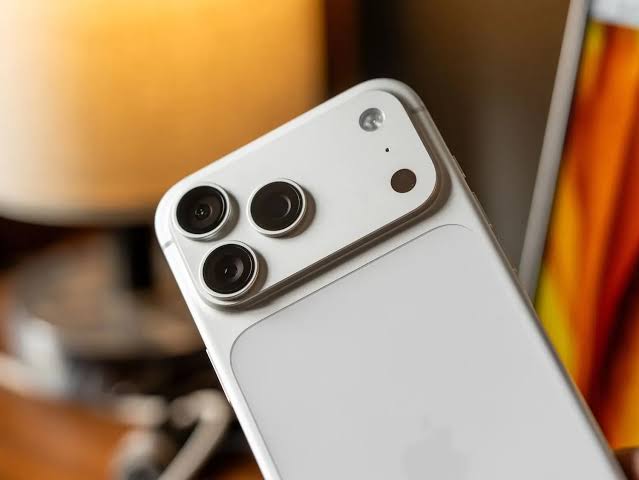
The global premium smartphone market is witnessing an intense battle for supremacy, a landscape where innovation is key and consumer loyalty is fiercely contested. As of September 2026, Apple has once again captured headlines with the unveiling of its highly anticipated iPhone 18 Pro. Positioned for photography enthusiasts, content creators, and users seeking a high-end experience, the device arrives boasting significant advancements, particularly in its imaging capabilities and overall performance.
The new iPhone 18 Pro introduces a sophisticated 48MP Fusion Main camera with variable aperture, a feature designed to offer unprecedented control over lighting and depth of field. Apple highlights that this innovative system, utilizing six laser-cut blades, allows for automatic or manual aperture adjustments directly through the Camera app, alongside new Pro controls for both photography and video. Powered by the formidable A20 Pro chip and running iOS 27 with next-generation Apple Intelligence and Siri AI, the iPhone 18 Pro represents Apple's continued commitment to integrating powerful AI capabilities with personal context.
However, the premium smartphone segment is far from a one-horse race. While Apple maintains a dominant position, capturing 65% of the global premium smartphone market share in the first half of 2026, a host of Android manufacturers are aggressively challenging this lead. These competitors have unleashed their own flagship devices, equipped with cutting-edge camera systems, powerful processors, immersive displays, advanced AI features, rapid charging technologies, and sophisticated zoom capabilities. For Nigerian consumers and tech aficionados worldwide looking for a top-tier smartphone experience without necessarily opting for an iPhone, the alternatives are more compelling than ever. Here, we delve into five prominent Android flagships that stand as formidable rivals to the new iPhone 18 Pro.
Samsung Galaxy S26 Ultra: The Zoom King with an S Pen Advantage
The Samsung Galaxy S26 Ultra, released in March 2026, emerges as an immediate and potent challenger to the iPhone 18 Pro. Samsung's flagship is a photography powerhouse, featuring a quad-camera setup that includes a staggering 200MP main camera, a 50MP ultrawide camera, a 10MP 3x telephoto lens, and a 50MP 5x telephoto camera. This configuration supports an astounding up to 100x digital zoom, providing a significant edge for users prioritising long-distance photography. It also boasts impressive video capabilities, capable of recording 8K video at 30 frames per second and 4K video at up to 120fps in Pro Video mode.
Beyond its camera prowess, the Galaxy S26 Ultra sports a expansive 6.9-inch Dynamic AMOLED 2X display with an adaptive 1–120Hz refresh rate and a peak brightness of up to 2,600 nits. A key differentiator for Samsung remains its integrated S Pen, offering enhanced functionality for writing, drawing, photo editing, and seamless phone navigation. For those prioritizing camera versatility, unparalleled zoom, a large vibrant display, and stylus support, the Galaxy S26 Ultra presents a compelling argument against Apple's latest Pro model.

Google Pixel 11 Pro: Computational Photography Redefined
Google's Pixel 11 Pro, launched in September 2026, positions itself as a strong alternative, particularly for users who place a premium on computational photography and advanced artificial intelligence. At its core, the device is powered by the Tensor G6 processor, which is meticulously engineered to drive its sophisticated camera and AI features.
The Pixel 11 Pro's camera system, comprising a 50MP main, 48MP ultrawide, and a 48MP 5x telephoto lens, is renowned for features such as 120x Super Zoom and Instant Night Sight, designed to dramatically improve low-light photography. Google also introduces Magic Capture, allowing simultaneous video and still image capture. The Tensor G6's updated TPU is touted as 50% more powerful than its predecessor, reinforcing the Pixel 11 Pro's appeal to users who seek Google's distinctive computational photography and AI capabilities over sheer camera hardware specifications.
Xiaomi 17 Ultra: Leica Partnership and Unmatched Charging Speed
For smartphone photography enthusiasts, the Xiaomi 17 Ultra, released in February 2026, presents an intriguing proposition. The device’s camera system, co-developed with Leica, is a marvel of engineering, featuring a 50MP main camera with a large 1-inch sensor, a 50MP ultrawide camera, and a 200MP telephoto camera. The telephoto lens covers an equivalent focal range of 75–100mm and can achieve up to 120x digital zoom.
The Leica partnership is central to its imaging experience, offering users a choice of Leica photographic styles and exclusive filters. The Xiaomi 17 Ultra also supports RAW photography, 8K video recording, and 4K Dolby Vision recording at up to 120fps. Beyond its formidable cameras, the phone boasts a 6.9-inch OLED display with a 1–120Hz refresh rate and is powered by a robust 6,000mAh battery, supporting 90W wired charging and 50W wireless charging. For those prioritizing advanced photography hardware, extensive zoom capabilities, and blazing-fast charging, the Xiaomi 17 Ultra stands out.
OPPO Find X9 Ultra: Hasselblad's Imaging Prowess
The OPPO Find X9 Ultra rounds out our list as another compelling Android flagship for photography-focused users. OPPO has consistently positioned its Find X series around high-end imaging, and the Find X9 Ultra takes this commitment to new heights, directly challenging premium camera phones like Apple's iPhone Pro series.
Co-developed with Hasselblad, the Find X9 Ultra is an imaging titan, featuring a Hasselblad 50MP 10x Ultra-Sensing Optical-Zoom Telephoto with an impressive 20x optical-quality zoom, extending to 120x digital zoom. It also boasts Dual Hasselblad 200MP Cameras that deliver clear images day or night, and supports 8K Ultra-Clear Video Recording. The device also packs a substantial 7050mAh large battery with 100W SUPERVOOC and 50W AIRVOOC fast charging, ensuring all-day power for demanding creative tasks. Its appeal lies in its comprehensive camera system, designed for professional-grade results and versatile shooting scenarios.
'The battle for premium smartphone dominance isn't just about raw power; it's about delivering a holistic ecosystem where advanced imaging, intelligent software, and robust hardware converge to redefine user experience.'
— Amina, National Editor-in-Chief
The Premium Smartphone Camera Megapixel Showdown
To further illustrate the competitive landscape in camera technology, here's a direct comparison of the main camera megapixels:
This chart clearly indicates the Android camp's aggressive push in megapixel count, with Samsung and OPPO leading the charge with 200MP main sensors. While Apple opts for a 48MP Fusion Main camera, its focus remains on computational photography and user control rather than raw pixel count.
Conclusion: A Vibrant and Competitive Market
The arrival of the iPhone 18 Pro undoubtedly sets a new benchmark in the premium smartphone segment. However, the vibrant competition from Android flagships like the Samsung Galaxy S26 Ultra, Google Pixel 11 Pro, Xiaomi 17 Ultra, and OPPO Find X9 Ultra demonstrates that consumers have a wealth of exceptional choices. Each of these Android devices offers a unique blend of cutting-edge camera technology, powerful performance, and innovative features, often surpassing the iPhone in specific areas such as zoom capabilities, raw megapixel count, or charging speeds.
In a market where the premium segment is growing and now accounts for a record 29% of global smartphone sales, the decision for consumers comes down to individual priorities. Whether it's the versatile zoom of Samsung, the AI-driven photography of Google, Xiaomi's Leica-powered optics and rapid charging, or OPPO's Hasselblad-tuned imaging, the Android ecosystem continues to innovate, ensuring that the premium smartphone experience remains diverse and exciting.