The AI landscape, as of March 2026, is undergoing a seismic shift, transitioning from mere assistive tools to truly autonomous, goal-driven systems. This pivotal moment is being defined by groundbreaking releases from industry titans: OpenAI's GPT-5.4 with its astounding 1-million-token context window and Nvidia's 'Vera Rubin' platform, purpose-built to power the next generation of AI factories. For software engineers globally, and particularly those navigating Africa's burgeoning tech ecosystem, understanding the architectural implications, language paradigms, and scaling challenges of this agentic era is paramount.
GPT-5.4: A Million Tokens for Extreme Reasoning and Native Computer Control
OpenAI officially released GPT-5.4 on March 5, 2026, marking a significant leap forward in large language model capabilities. The most headline-grabbing feature is its experimental 1-million-token context window, available through its Codex and API offerings, with a standard context of 272,000 tokens. This massive expansion allows the model to process entire codebases, comprehensive legal briefs, or multi-hour agent sessions without losing coherence or vital information.
Beyond sheer memory, GPT-5.4 introduces native computer control, enabling it to operate software and websites like a human user by analyzing screenshots and issuing input commands in real-time. This capability is transformative for agentic workflows, moving beyond simple text generation to active engagement with digital environments. On the OSWorld-Verified benchmark, which measures desktop navigation, GPT-5.4 achieved a remarkable 75.0%, surpassing the human baseline of 72.4%. The model also boasts an "extreme reasoning mode," allowing it to dedicate more compute to complex questions, thereby reducing errors in longer tasks.
From an architectural standpoint, the management of such expansive context windows presents formidable backend challenges. Engineering teams are grappling with optimizing memory management, inference optimization, and distributed processing to handle the immense computational load. Furthermore, GPT-5.4's enhanced Tool Search architecture reduces token consumption by 47% on complex tasks, a critical factor for developers building high-volume agentic applications. Frontend interfaces will need to evolve, adopting sophisticated API designs and real-time monitoring tools to effectively interact with these highly autonomous and context-aware agents. OpenAI also offers GPT-5.4 Pro for maximum performance on complex tasks, although pricing for the standard model is approximately $10 per million input tokens and $30 per million output tokens, with surcharges for experimental long-context use.
Nvidia's 'Vera Rubin' Platform: Powering the Agentic AI Factories
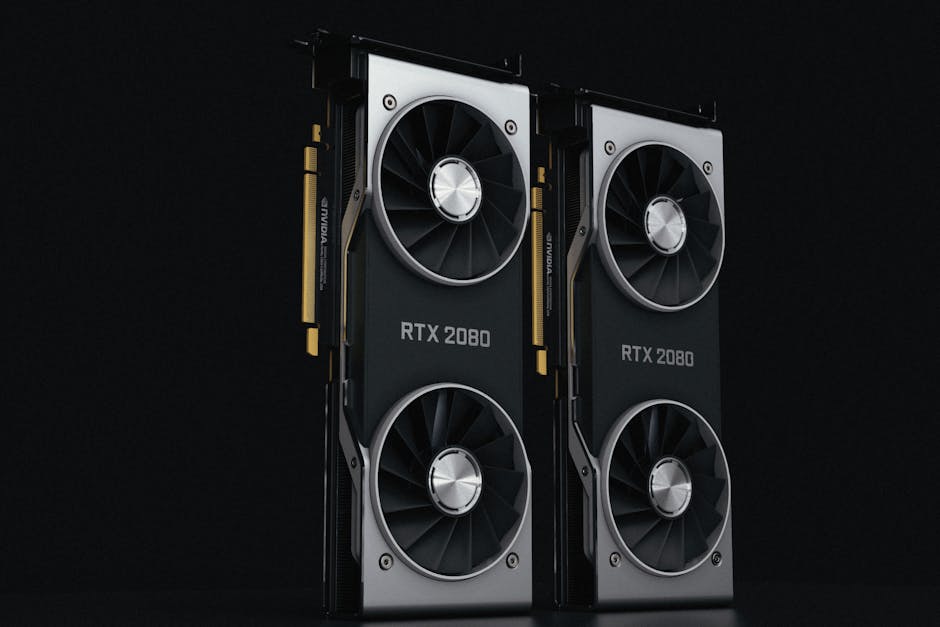
Complementing OpenAI's software advancements, Nvidia unveiled its 'Vera Rubin' platform at GTC on March 16, 2026, signaling a significant hardware paradigm shift for agentic AI. This isn't just a new chip; it's a comprehensive, vertically integrated AI infrastructure designed to scale the world's largest AI factories. Jensen Huang, Nvidia's CEO, stated,
"Vera Rubin is a generational leap — seven breakthrough chips, five racks, one giant supercomputer — built to power every phase of AI. The agentic AI inflection point has arrived with Vera Rubin kicking off the greatest infrastructure buildout in history."
— Jensen Huang, Founder and CEO of NVIDIA
The Vera Rubin platform integrates a suite of advanced components: the Vera CPU, Rubin GPU, NVLink™ 6 Switch, ConnectX®-9 SuperNIC, BlueField®-4 DPU, Spectrum™-6 Ethernet switch, and notably, the newly integrated Groq 3 LPU. The Vera CPU, in particular, is purpose-built for agentic AI and reinforcement learning, demonstrating twice the energy efficiency and three times the memory bandwidth per core compared to traditional x86 CPUs. It handles critical tasks like tool calling, SQL queries, and code compilation, offloading these from the GPUs.
Performance metrics are staggering: the NVL72 racks, combining 72 Rubin GPUs and 36 Vera CPUs, promise up to 10x higher inference throughput per watt and the ability to train large Mixture-of-Experts models with one-fourth the GPUs of the previous Blackwell platform. The integration of Groq 3 LPUs, designed for low-latency inference, when deployed alongside NVL72, can deliver up to 35x higher inference throughput per megawatt for trillion-parameter models, significantly boosting response generation for agentic systems. These systems are expected to be available from partners in the second half of 2026.
Scaling Agentic AI: Global Adoption and African Realities
The move of agentic AI from laboratory to production is not merely a technological evolution; it's an operational imperative. Gartner predicts that by 2026, 40% of enterprise applications will embed task-specific AI Agents, a significant jump from low single-digit adoption in 2025. This shift necessitates robust backend architectures capable of multi-agent orchestration, persistent memory for context handling, and seamless integration with external tools and data sources. Popular open-source frameworks like LangGraph, AutoGen, CrewAI, LlamaIndex, and Haystack are becoming indispensable for developers building these complex systems, offering modular agent design and autonomy.
For Africa, this agentic AI revolution presents both immense opportunities and unique challenges. While the continent is experiencing accelerated AI adoption, scaling remains a critical hurdle. Sub-Saharan Africa, for instance, lags significantly in AI infrastructure, with no country scoring above 56 out of 100 on the 2025 Government AI Readiness Index, compared to 89.27 for the US and 76.92 for China. Persistent issues include unreliable electricity supply, limited data center capacity, shortages of computing hardware, and insufficient high-speed internet connectivity. Furthermore, skills shortages and fragmented data governance hinder full-scale AI transformation, with Africa accounting for only 3% of the global AI talent pool.
Despite these constraints, the potential for AI in Africa is enormous. The African Development Bank estimates AI could generate up to $1 trillion in additional GDP by 2035. Countries like Nigeria, Kenya, South Africa, and Mauritius are leading regional efforts in AI readiness and investment. The increasing availability of lower-cost AI models is also broadening access, even if it raises questions about data sovereignty and regulatory oversight. The strategic adoption of open-source AI frameworks can play a crucial role in democratizing access to advanced agentic capabilities, fostering local innovation and building resilient AI ecosystems across the continent. The imperative for African software engineers is clear: to leverage these global breakthroughs while simultaneously innovating solutions tailored to local infrastructure realities and contributing to the global open-source AI commons.