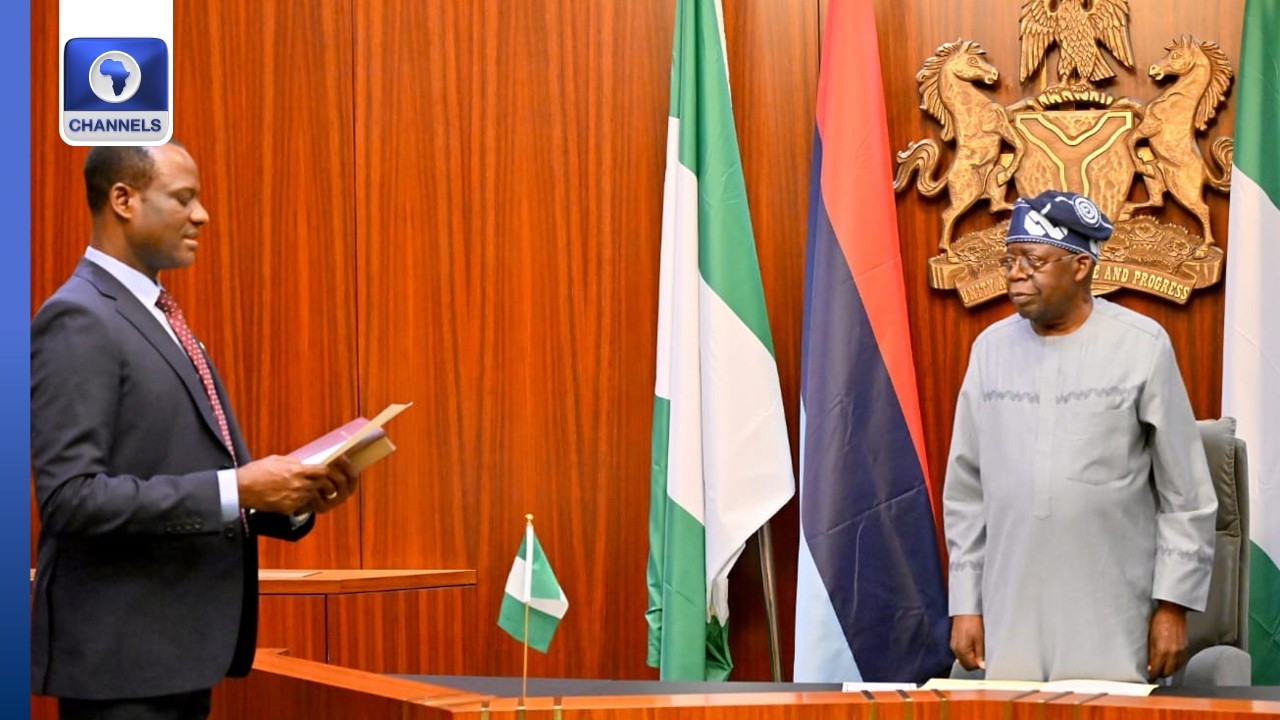
ABUJA, Nigeria – In a critical display of regional solidarity and strategic foresight, Nigeria’s Minister of Foreign Affairs, Yusuf Tuggar, and Ghana’s Minister for Foreign Affairs, Samuel Ablakwa, convened on March 9, 2026, at a Chatham House event, to address the escalating security challenges plaguing West Africa. The high-level discourse underscored the urgent need for a cohesive regional response to the persistent threat of Boko Haram, the evolving dynamics within the Economic Community of West African States (ECOWAS), and broader peacebuilding efforts across the sub-region.
The meeting, held against a backdrop of intensified extremist activities, saw both ministers deliberating on the impact of the withdrawal of the Alliance of Sahel States (Mali, Burkina Faso, and Niger) from ECOWAS, recent US airstrikes in Nigeria, and the complex relationship with former colonial powers like France. The Sahel region, indeed, remains the epicentre of global terrorism, accounting for over half of all terrorism-related deaths worldwide since 2019, with a reported 51% in 2024 alone.
ECOWAS's Evolving Security Architecture: Ambition Meets Operational Reality
Central to the discussions was the operationalisation of ECOWAS’s ambitious security initiatives. In August 2025, ECOWAS Commission President Omar Touray unveiled plans for a robust 260,000-strong counterterrorism force, earmarked with an annual budget requirement of $2.5 billion, designed to offer rapid deployment and crucial logistical support to frontline member states. This declaration was swiftly followed by a commitment in September 2025 to deploy 1,650 military personnel in 2026 as part of its Standby Force.
Further refining its strategy, ECOWAS in February and March 2026 detailed plans for a 2,000-strong standby force intended for deployment by the end of 2026, with an emphasis on self-financing to combat terrorism and safeguard democratic governance. Concurrently, the ECOWAS Parliament in November 2025 approved a Mutual Defence and Constitutional Order Protocol, establishing a 5,000-strong ECOWAS Standby Intervention Force (ESIF), headquartered in Abuja, with an estimated annual cost of USD 320–380 million. This force is mandated for rapid intervention in cases of unconstitutional changes of government, significant security breakdowns, and threats to regional stability. The multifaceted approach signals a determined, albeit incrementally scaled, effort to fortify regional defence mechanisms.
The Resurgence of Boko Haram and ISWAP: A Critical Threat Assessment
The urgency of these security discussions is underscored by recent, harrowing events. Between March 3 and 9, 2026, Boko Haram and its splinter faction, the Islamic State West Africa Province (ISWAP), unleashed a series of coordinated assaults across Borno State, northeastern Nigeria, resulting in the deaths of over 100 Nigerian soldiers. This period represents one of the deadliest weeks for the Nigerian military since the 2018 Metele massacre. Furthermore, in October 2025, Boko Haram’s seizure of Kirawa border town led to the displacement of more than 5,000 residents. The 15-year conflict has tragically claimed nearly 40,000 lives and displaced approximately two million people in Nigeria's North-East.
Data analysis of the current security landscape reveals a grim picture. From January 1 to February 10, 2026, Nigeria recorded 1,258 fatalities due to violence, as reported by Vanguard newspaper. In the Northwest region alone, a geopolitical research firm, SBM Intelligence, documented 2,938 kidnappings between July 2024 and June 2025, representing over 60 percent of reported incidents nationwide. These figures highlight the pervasive and evolving nature of the threats, which also include the emergence of groups like Lakurawa, a reported partnership between terrorists and bandits, financing operations through kidnapping for ransom.
West African Security Funding: Ambition vs. Current Capacity (Annual USD)
Comparison of estimated annual funding for the 5,000-strong ECOWAS Standby Intervention Force versus the projected budget for the 260,000-strong counterterrorism force.
Ghana’s Foreign Minister, Samuel Ablakwa, also revealed that Ghana convened a consultative forum in January 2026, leading to the formation of a “Coalition of the Willing” to counter violent extremism, as the previous Accra Initiative had lost momentum. This new framework, supported by the African Union, seeks to deploy approximately 1,600 troops for cross-border operations. These diplomatic and military manoeuvres underscore a region grappling with complex security challenges, demanding innovative and self-reliant solutions. The upcoming flag-off of the Combined Maritime Task Force (CMTF) in Lagos, Nigeria, from May 31 to June 1, 2026, with Nigeria providing significant assets and five other countries expressing interest, further demonstrates the multi-domain approach to security.