
Intro: The vibrant clamour of Lagos markets, the bustling energy of Abuja's tech hubs, and the relentless drive of Nigerian youth searching for a livelihood – these scenes paint a familiar picture of a nation teeming with potential, yet grappling with persistent challenges of unemployment and underemployment. As the world buzzes with talk of Artificial Intelligence (AI), a vital question echoes in every Nigerian home: will this new wave of technology be a beacon of hope or another hurdle in the race for survival?
What Is Happening on the Ground
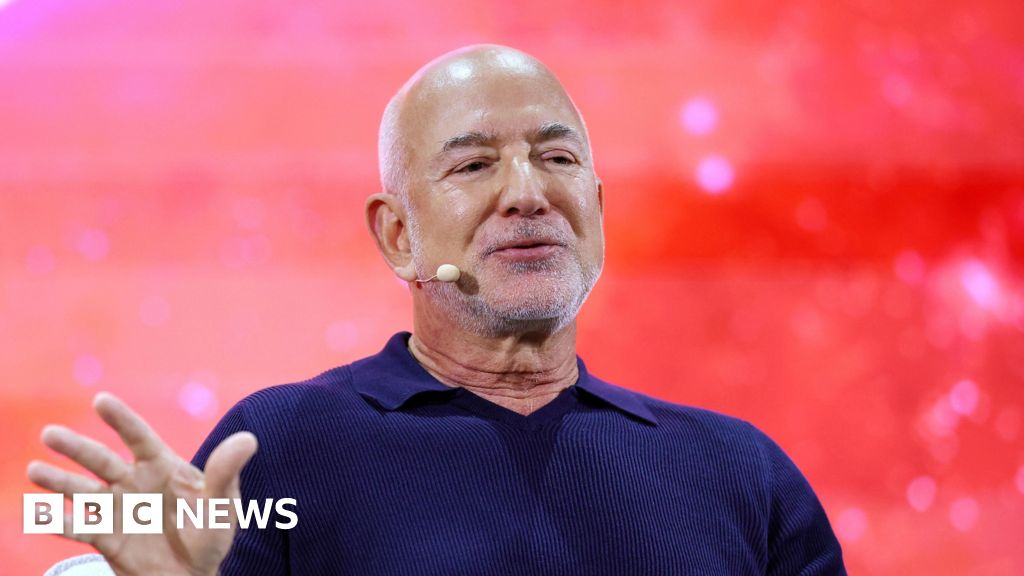
Recently, Amazon founder Jeff Bezos, a titan of global commerce and innovation, made a bold prediction that has sparked considerable debate: AI, he insists, will create more jobs for humans rather than making them redundant. Speaking at a major tech conference in Paris, Bezos pushed back against the widespread anxiety that AI is a job killer, arguing instead that this technological marvel will "create a labour shortage" by unlocking fresh opportunities and boosting the demand for human labour. He envisions a future where technology dismantles barriers, not human potential. This is a strikingly optimistic view, particularly when juxtaposed against the warnings from figures like former UK prime minister Rishi Sunak, who has highlighted AI's potential impact on young people's job prospects.
"While these global tech gurus debate the future, the reality on the streets of Nigeria is stark. Our young people aren't worried about AI replacing their jobs; they're worried about finding *any* job in the first place. The discussion needs to shift to how we can leverage this technology to bridge our existing employment gaps, not widen them." - Dr. Ngozi Okafor, Labour Economist, University of Lagos.
The Main Issues
Bezos's vision, while inspiring, faces a different reality when viewed through the Nigerian lens. Our nation, with its burgeoning youth population and evolving industrial landscape, must critically examine how AI's advance will intersect with our unique economic and social fabric. His new AI venture, Prometheus, which aims to accelerate physical manufacturing, offers a compelling example. For a country like Nigeria, striving to revitalise its manufacturing sector, the promise of increased productivity is tempting. However, the UK's Trades Union Congress (TUC) has cautioned that unchecked AI could repeat "the disaster of deindustrialisation," enriching shareholders while "degrading or displacing" jobs. In Nigeria, sectors like retail, financial services, agriculture, and logistics, which employ the majority of Nigerians, are already being restructured by AI, putting workers without AI-adjacent skills at risk of displacement.
The central issue for Nigeria isn't just about job *creation*, but also job *readiness*. Are our educational institutions churning out graduates equipped with the digital literacy, critical thinking, and technical skills necessary for an AI-driven economy? The gap between the skills demanded by emerging technologies and the competencies currently available in our workforce is a chasm that needs urgent bridging. Without intentional investment in re-skilling and up-skilling programmes, especially for our youth, Bezos's "labour shortage" could manifest as a shortage of *qualified* labour, leaving a vast segment of our population behind. The National Bureau of Statistics reported a youth unemployment rate of 8.4% for ages 15-24 in Q1 2024, though experts suggest the reality on the ground might be much higher due to methodological changes. Furthermore, over 85% of graduates still lack foundational digital skills, making them ill-prepared for a rapidly evolving job market.
- Nigeria's youth unemployment rate remains a significant concern, with about 23% of young respondents in a 2024 survey stating they are unemployed and actively seeking work.
- Access to reliable internet connectivity, a cornerstone for AI engagement, is still a challenge for many, particularly in rural areas, where only 23% of Nigerians used the internet in 2022.
- Around 130 million Nigerians remain offline despite living in areas covered by mobile broadband, highlighting a significant 'usage gap' in digital adoption.
- Investment in Science, Technology, Engineering, and Mathematics (STEM) education is crucial for preparing a future-ready workforce, but many schools lack adequate resources and qualified teachers.
- A significant portion of the Nigerian economy relies on the informal sector, which could be particularly vulnerable to technological disruption without proper safeguards and support.
The Impact on Daily Life
For the everyday Nigerian, the conversation around AI often feels distant, yet its potential impact on their daily struggles is profound. Consider the market trader whose livelihood could be affected by automated logistics, or the artisan whose craft might be challenged by AI-driven design and manufacturing. While AI promises efficiency and potentially lower costs for consumers in the long run, the immediate disruption for those in traditional jobs could be severe without adequate social safety nets and transitional support.
The informal sector, which accounts for a substantial part of Nigeria's economy, faces both opportunities and threats. AI can offer visibility, streamline supply chains, and even help informal workers access credit and transition to the formal economy. However, it also poses risks of job displacement if workers cannot adapt. Automation in agriculture, for instance, could displace millions of jobs in a sector where more than half the working population is engaged in some states.
Furthermore, the cost of technology itself remains a barrier. While AI tools become more accessible globally, the infrastructure to support them – stable electricity, affordable internet, and access to necessary hardware – are luxuries for many Nigerians. This digital divide threatens to create a two-tiered society: those who can harness AI for advancement and those who are further marginalized by its rise. Rural areas, for instance, have significantly lower internet penetration rates compared to urban centres, and affordability remains a major hurdle, with some rural Nigerians spending up to 20 percent of their monthly income on data. The discussion around AI and space exploration, another of Bezos’s ventures with Blue Origin, while fascinating from a global perspective, feels almost alien to those struggling with basic necessities. While Nigeria has its own space agency, the immediate focus for the average citizen remains on terrestrial challenges – food security, affordable healthcare, and quality education.
The promises of AI must be carefully weighed against the realities of implementation in a developing economy. How can AI truly "unlock new opportunities" for the millions without formal education or digital skills? The path to human-machine collaboration, as showcased by companies like Unitree and HABS with their brain-controlled robots at VivaTech, seems a far-off dream when basic digital literacy is still a hurdle.
| Skill Area | Traditional Job Training (e.g., Trade Skills) | AI-Driven Job Training (e.g., Data Analytics) |
|---|---|---|
| Estimated Training Time | 3-12 Months | 6-24 Months (often continuous learning) |
| Average Cost (Local Institutions) | ₦50,000 - ₦250,000 | ₦150,000 - ₦800,000+ |
| Required Prerequisite Skills | Basic Literacy, Manual Dexterity | Strong Math/Logic, Digital Literacy, English Proficiency |
What Needs to Be Done
For Nigeria to truly harness the transformative potential of AI, as the TUC also acknowledged, it requires a concerted, multi-faceted approach. Firstly, there must be a robust investment in education reform, shifting focus from rote learning to critical thinking, problem-solving, and digital skills from primary school upwards. Vocational training centres need to be revamped and equipped to teach AI-related skills, coding, data analysis, and robotics, making them accessible and affordable for young Nigerians, particularly those in underserved communities. Organizations like STEM Nigeria are already working to provide hands-on training and mentorship.
Secondly, governance plays a crucial role. The government must develop clear national AI strategies and policies that encourage innovation while safeguarding against job displacement. This includes fostering an enabling environment for local tech startups, incentivising private sector investment in AI research and development, and establishing regulatory frameworks that protect workers. Social safety nets, re-training programmes, and entrepreneurial support are vital to assist those whose livelihoods might be impacted by automation. Nigerian firms also need to go beyond adopting AI tools to developing local talent, allocating budgets for skills development and internal mobility programs.
Finally, inter-African collaboration cannot be overlooked. Nigeria could lead or participate in regional initiatives to share knowledge, pool resources for AI infrastructure, and develop localised AI solutions that address unique African challenges, rather than passively adopting Western models. By proactively preparing our workforce, fostering responsible innovation, and ensuring equitable access to technology, Nigeria can move beyond merely observing the AI revolution to actively shaping a future where it serves the prosperity of all its citizens, not just a select few.